
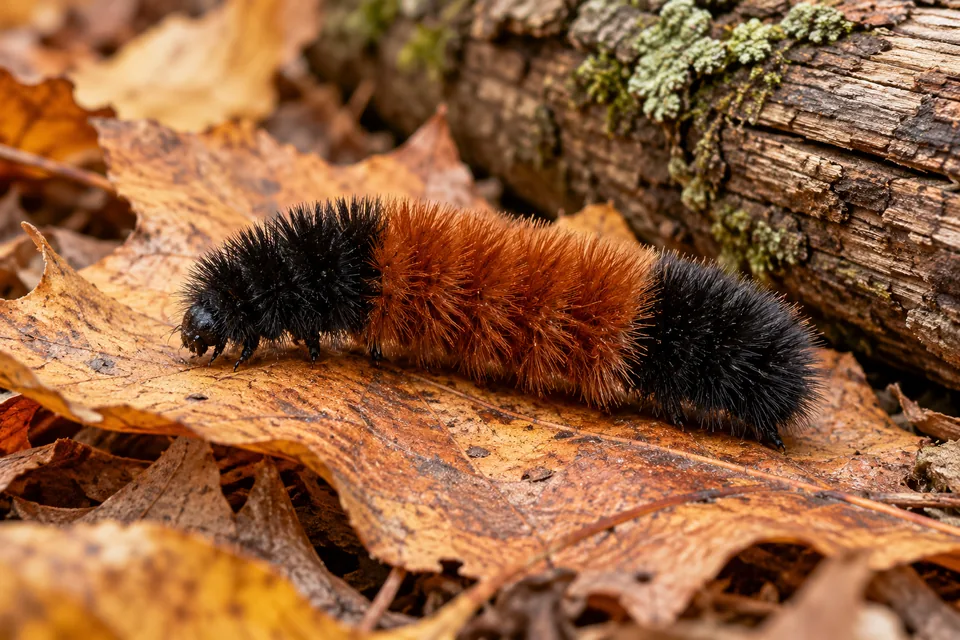
A tiny weather chart?
A woolly bear caterpillar’s coloured bands do not reliably predict how harsh the coming winter will be. The familiar claim is folklore: more black supposedly means a harder winter, while a wider rusty middle promises a milder one.
It makes an appealing outdoor guessing game. But the US National Weather Service explains why the bands are not a winter forecast.
A record of growing
A caterpillar’s colouring reflects factors such as its age, feeding and species. As woolly bears grow and shed their skins, their colouring changes. Two different-looking caterpillars need not be issuing different predictions.
The useful twist is about time: the bands tell us about the animal’s growth, rather than weather that has not happened yet.
Finding a winter address
A woolly bear crossing a path in autumn is looking for a sheltered place to spend winter, such as under bark or a fallen log. Its direction is not a secret forecast either.
For the larger seasonal story, see why summer is warmer than winter. Preparing for a season and predicting its severity are different things.
Sensing weather is a different skill
Animals can still notice real changes. The Hong Kong Observatory describes birds sensing air pressure and infrasound, which can help them respond to approaching weather. That is different from reading a whole winter from a caterpillar’s coat.
Even scientific seasonal forecasts describe probabilities, not a guaranteed sequence of days, as the Met Office explains.
The woolly bear remains worth noticing. Its bands offer a clue to its own life, not a weather chart for yours.