
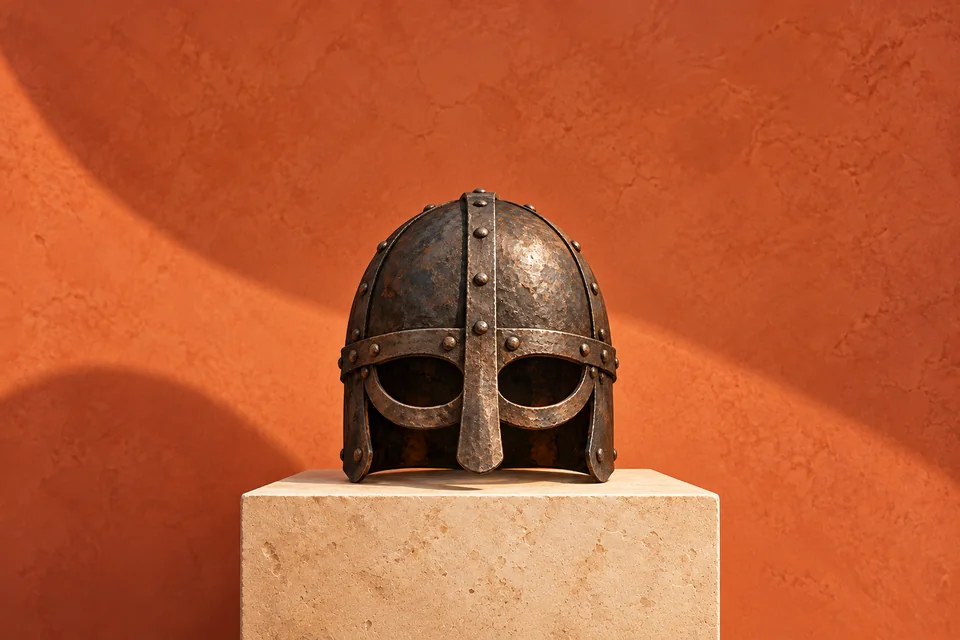
Picture a Viking. Now check the helmet.
There is no good evidence that Viking warriors normally wore horned helmets in battle. The familiar horns are a much shakier historical detail than the cartoons suggest.
It is an awkward discovery if you have just drawn a very impressive pair. But the objects archaeologists find tell a more interesting story.
Start with an actual find
The helmet found at Gjermundbu in Norway has no horns. The National Museum of Denmark describes this find, along with fragments of other helmets.
Surviving examples are scarce. That makes them valuable evidence, but it also means we should be careful about claiming exactly what every Viking wore.
Real horns, wrong age
There really are spectacular ancient horned helmets: the two bronze helmets from Viksø in Denmark.
Here is the catch: they belong to the Bronze Age, long before the Viking Age. The museum suggests they were probably used in religious ceremonies. An impressive object can be real and still belong to the wrong chapter of history.
A picture is another clue
The museum also notes horned figures on a tapestry from the Viking-age Oseberg burial. Such images leave room for ceremonial or display headgear; they do not establish the everyday battle outfit of Viking warriors.
So ask two questions when a helmet looks familiar: when is it from, and what was it used for? For another surprising mix-up in time, compare Cleopatra, the pyramids and the Moon landing.