
Same sound, different meaning
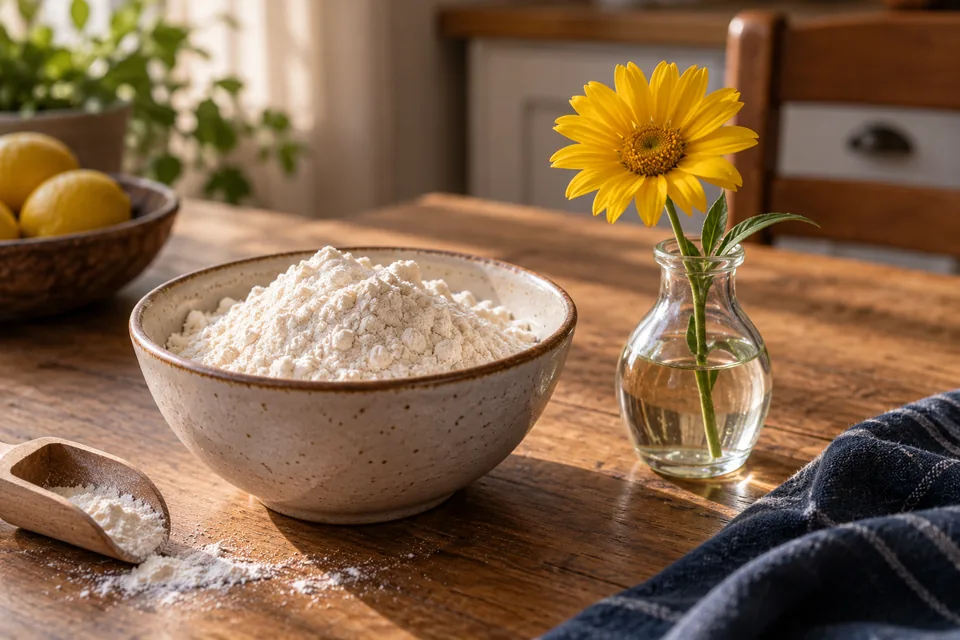
Homophones are words that sound the same but have different meanings. Flour is a baking ingredient; a flower has petals. Same sound, very different shopping lists.
Turn up with flour when someone wanted a flower and you have the beginning of a cake, but a rather disappointing bouquet.
The flour and flower dictionary entries give the same pronunciation. Other pairs include knight/night and two/too.
How do you choose the right spelling?
Use the meaning of the whole sentence. The surrounding words provide context: a vase suggests a flower, while a cake recipe suggests flour.
| Sentence | Word to choose | Helpful clue |
|---|---|---|
| Put the ___ in the vase. | flower | A vase holds flowers. |
| Stir the ___ into the cake mixture. | flour | Flour is a baking ingredient. |
| I would like ___ biscuits. | two | We are counting biscuits. |
| I would like a biscuit ___. | too | This person would also like one. |
The last two words appear in Merriam-Webster’s explanation of homophones, alongside to. Matching sounds do not guarantee matching spelling.
Try three pairs with your ears
Find one word for each clue. Each pair should sound the same. Say your answers aloud before opening the answers.
- A baking ingredient / something with petals.
- A horse-shaped chess piece / the dark part of the day.
- A number after one / another way to say “also”.
Check the three pairs
1. Flour / flower. One goes into your cake; the other can go in a vase.
2. Knight / night. The chess piece is a knight. Night is the time between dusk and dawn. The dictionary gives knight and night the same pronunciation.
3. Two / too. Two counts things. Too can mean also: “I want to come too.”
Now make up a silly sentence using both words from one pair. “The knight only rides at night” keeps the two meanings clear, even though they sound alike.
A word puzzle can connect sounds or meanings
Look at flour, sugar, butter and eggs. They belong together because they can all be baking ingredients. Now look at flour and flower. This time the connection is sound.
In a word puzzle, try explaining the relationship in one short sentence. Then check that it fits every clue. Our Connections guide shows how to test a possible link.
What about words that look alike?
Homophones share a sound; homographs share a spelling. The terms can overlap. Merriam-Webster’s guide to the different word pairs explains the distinction.
Accents matter, too. A pair that sounds identical to one speaker may sound different to another. Check a dictionary’s audio if a puzzle’s suggested pair does not work in your accent.
For a different word surprise, try words that can mean their own opposite. This time the twist is in the meaning.