
Buried before it vanishes
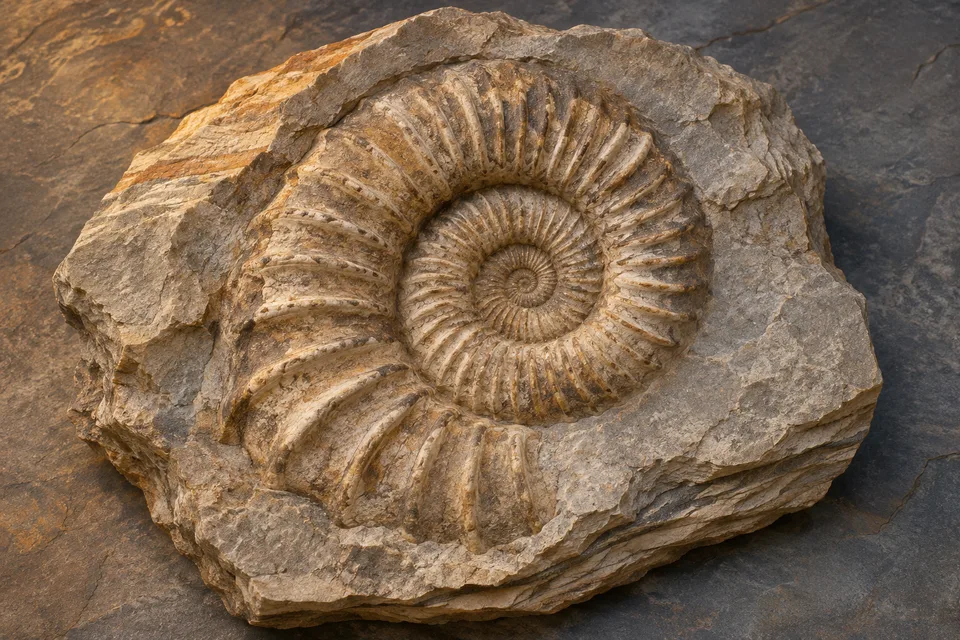
Many fossils form when remains are buried by sediment and preserved as the surrounding material becomes rock. Minerals may fill spaces or replace material; other fossils preserve an impression or a trace of activity. A fossil does not have to be a complete skeleton.
Most living things leave no fossil. Decay, scavengers and weather can destroy their remains. Quick burial helps protect them, and hard parts such as teeth and shells usually have a better chance than soft tissues. The National Park Service explains these advantages.
Mud and sand are therefore part of the story, not just dirt covering a discovery. If you have wondered where a river gets its load, start with why rivers turn brown after rain.
What happens inside a buried bone?
Groundwater can carry dissolved minerals into the tiny spaces within a bone or piece of wood. When minerals are deposited in those pores, the process is called permineralisation.
Replacement is different: original material dissolves and other minerals take its place. Both processes can preserve details, but “the whole animal turned to stone” is too simple a description. The National Park Service’s guide to body fossils separates these mechanisms.
Leaves can leave a different sort of record. Compression and impressions may preserve a flattened outline or fine surface details. There is more than one route from a living thing to a fossil.
A mould is the space; a cast fills it
A buried shell can dissolve after the material around it has hardened. The shell-shaped space left behind is a natural mould. If minerals or sediment later fill that space, they can make a cast.
Think of a jelly mould and the jelly you tip out. One is the shape-making hollow; the other takes that shape. This kitchen comparison is an analogy, not a model of the chemistry underground.
Oxford’s fossil-formation guide follows a mineral-filled cast through burial, dissolution and exposure. The cast can keep the external shape without retaining the original skeleton’s internal structure. An impressive outline does not mean every original part is still there.
A footprint without a foot
A fossil footprint records an action. The animal can walk away, leaving an impression that survives burial and later geological change. Burrows are another example of these trace fossils.
That is a different kind of evidence from a fossil tooth or shell. A body fossil preserves part of the organism, or its form; a trace fossil records something it did. The distinction helps explain why fossil sites can reveal activity even when no skeleton is found.
The British Geological Survey describes both kinds, alongside rarer preservation such as insects trapped in amber. Fossils are not all dinosaur bones, and not all of them have been replaced by stone.
How does a buried fossil reach the surface?
Burial is only part of the journey. Rock can later be raised, and weathering and erosion can expose what was hidden inside it. Oxford includes this final stage in its explanation: preservation and discovery are separate events.
The rocks matter too. Fossils are typically associated with sedimentary rocks, although the British Geological Survey notes exceptions in some mildly metamorphosed rocks. The fossil record is incomplete because preservation favours some organisms and environments over others.
For another way water reveals a landscape’s history, follow how erosion shapes a waterfall. A present-day surface can be the latest page of a much longer story.