
Why the river drops
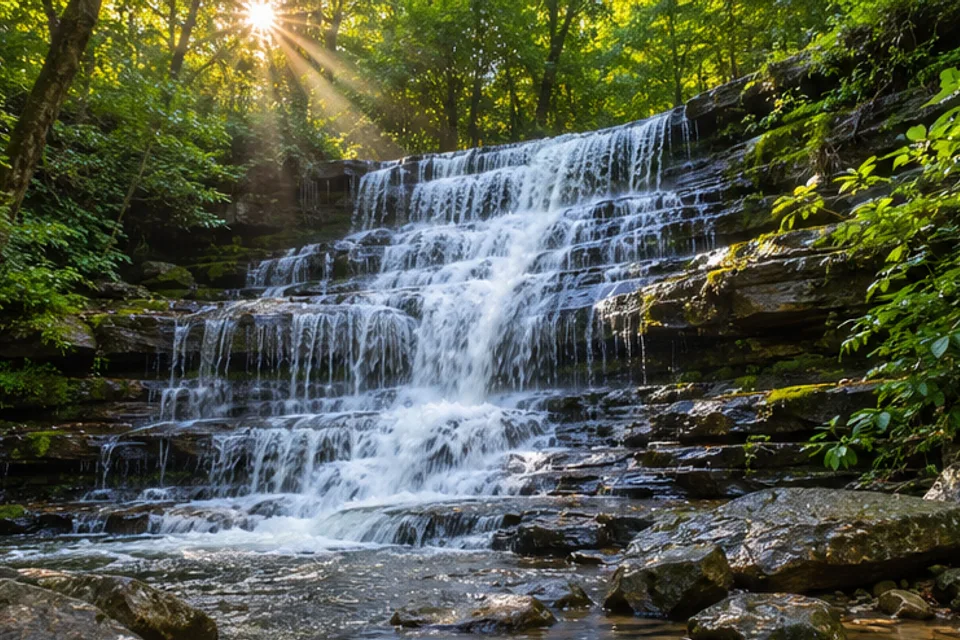
A waterfall forms where flowing water meets a sudden drop in its channel. One common way to create that drop is for water to wear away softer rock faster than a harder layer beside or above it. The harder rock can be left as a step that the river runs over.
A step that moves uphill
Imagine a tough shelf over softer rock. Water hits the base, and erosion can cut a recess beneath the shelf. Pieces of the unsupported ledge can eventually break off. The water then falls at a point farther upstream. A gorge below the fall can mark the stretch it has already moved through.
Read the rock as well as the water
Different waterfalls can start differently. In Yellowstone, some drops occur at a boundary between rock types and others at the edges of old lava flows. Compare the sharply falling reach with a bend in our guide to river meanders, where erosion and deposition help the river shift sideways.
Try the companion Academy exercise, or find your way through the water cycle from cloud to coast.
Read the source: US Geological Survey · Waterfalls of Yellowstone.