
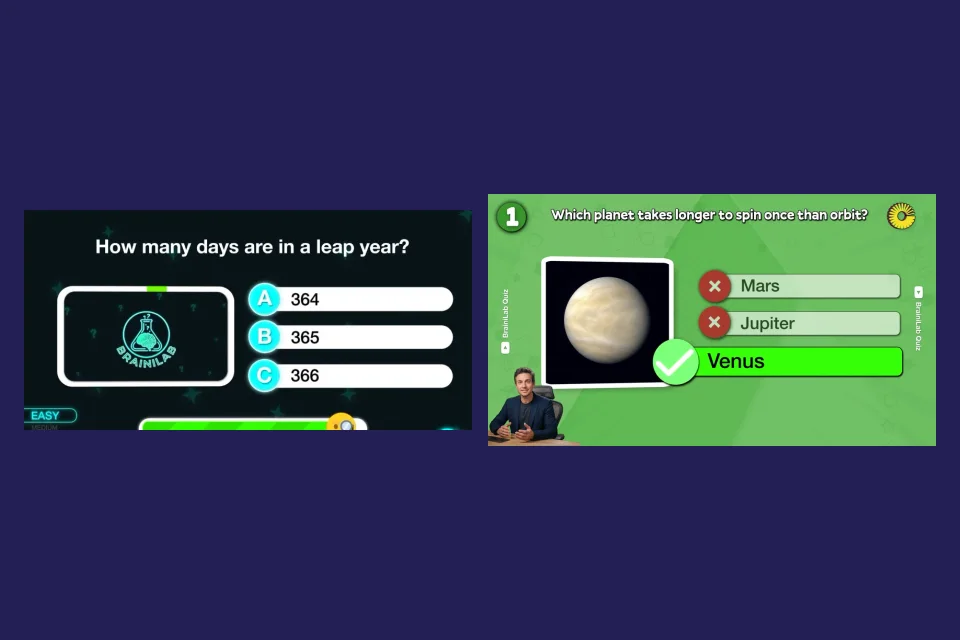
April had the essentials
The April videos already had the play-along format we still use. A question appears above an image, three choices sit beside it and a timer gives you time to decide. From April to November, we kept that rhythm and refined the way questions, reveals and round changes appear on screen.
In the 3 April general knowledge challenge, a bear sits beside a question about Goldilocks. The 7 April quiz uses the same layout for a leap-year question, with the BrainiLab flask in the picture slot. The frame can give a visual cue or simply keep the layout familiar.
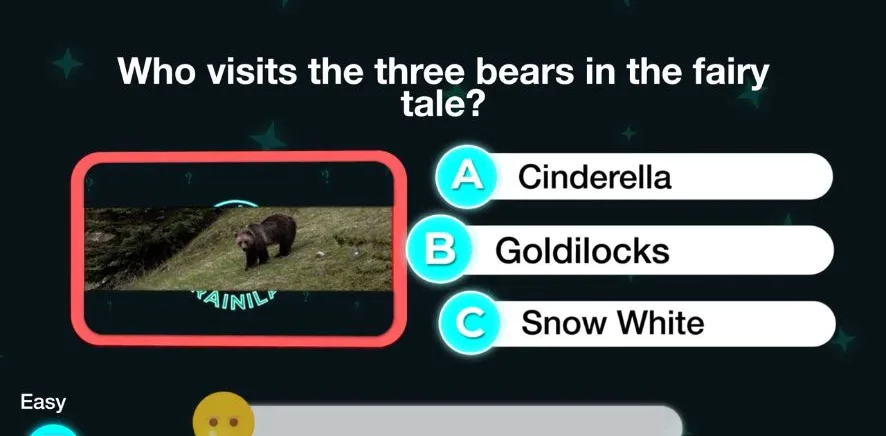
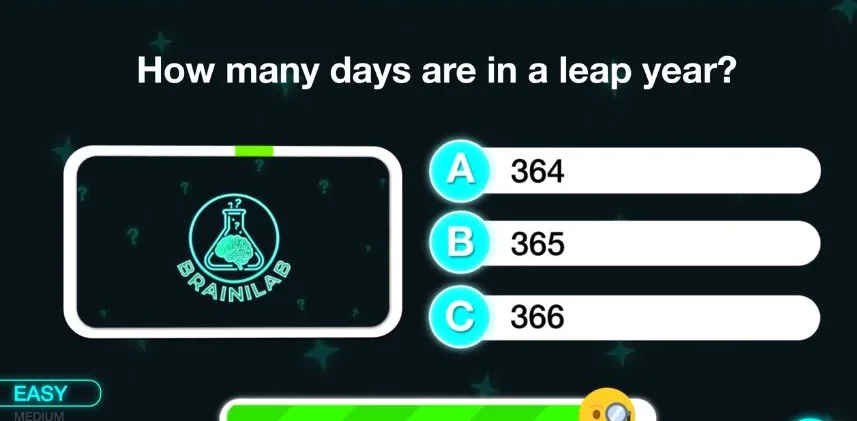
September showed where the layout needed room
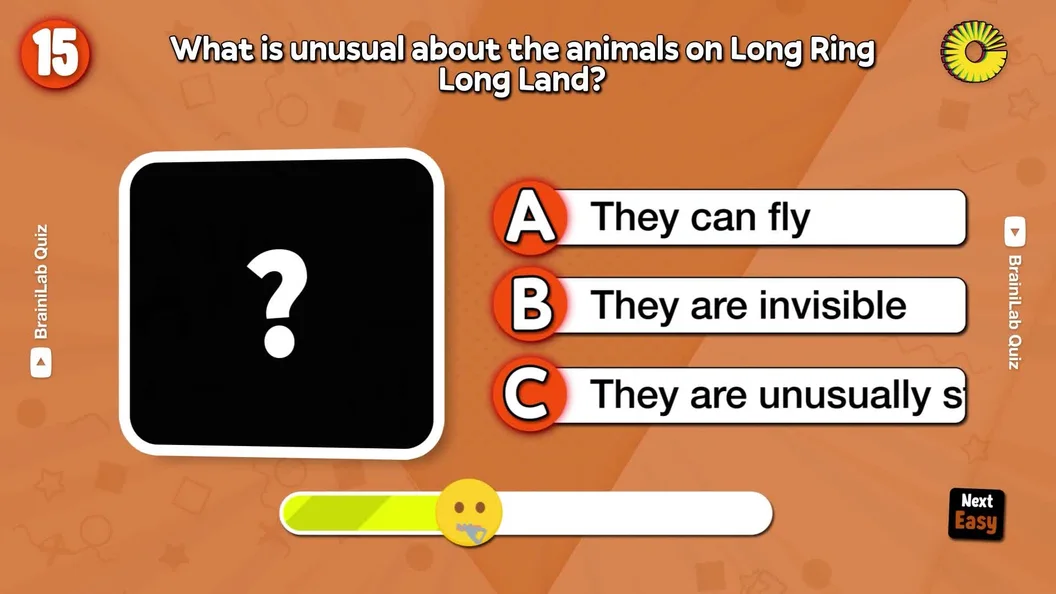
In a working cut reviewed on 18 September, the picture frame stayed on the left and the answers stayed on the right. A numbered badge made it easier to keep your place. We also tried questions that made you identify something from a picture or think of an answer before seeing it.
Question 15 exposed a useful problem. The third option ran beyond its answer bar. When the timer is moving, a player needs to read all three choices at a glance. This is the sort of issue we check in the finished frame, where a short phrase can still take up a lot of space.
November gave a longer quiz a clearer structure
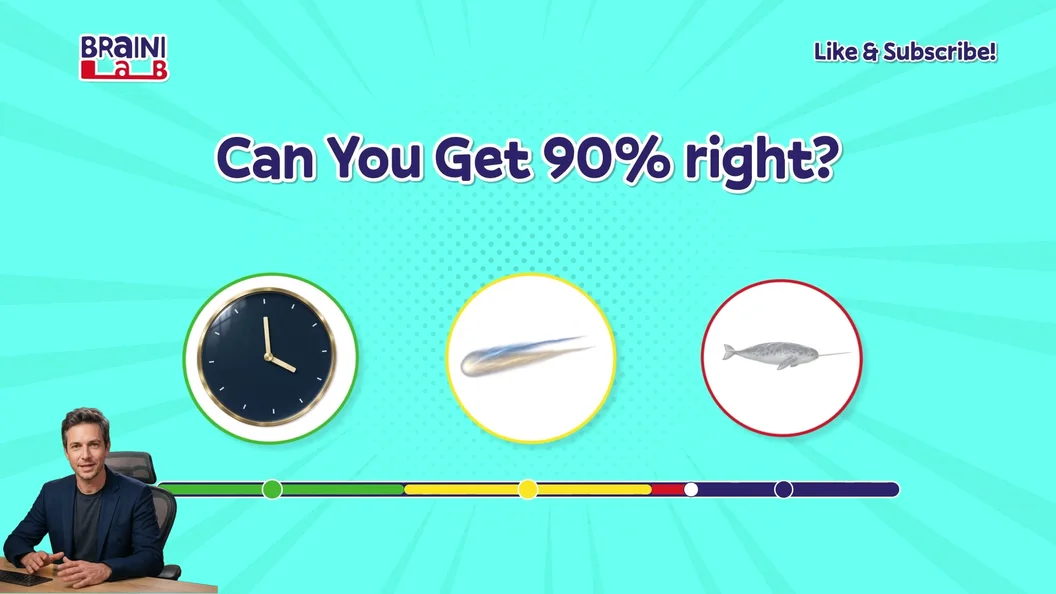
The 14 November general knowledge video splits 60 questions into six rounds. Its opening shows the presenter, sample images and a row of round markers. Those cues tell you how the quiz is organised before the questions begin.
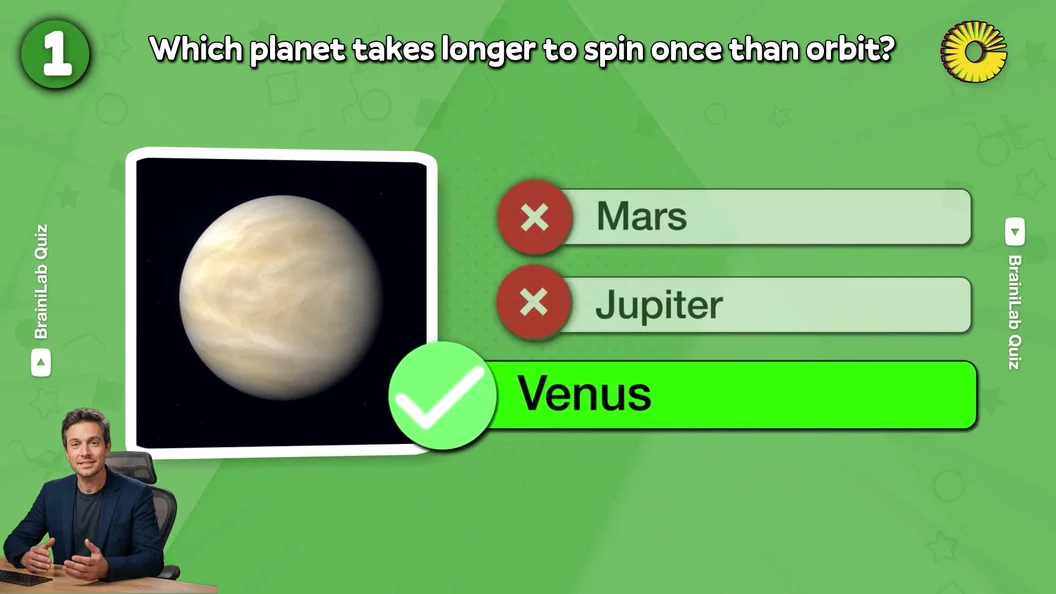
At the first answer reveal, the choices remain in the same places. A tick marks Venus and crosses mark the other options. Each result has both a colour and a symbol, so it is easier to spot the answer when watching on a television or from across a room.
What stayed familiar
Try pausing one April video and the November video on a question. The image and answer positions are familiar straight away. Look again at the round markers, the presenter and the answer reveal. Those are the details that help you follow a longer game without losing your place.
Our YouTube device study shows the part televisions played in a separate snapshot of watch time. This visual comparison follows the design choices in the videos. You can also see how the BrainiLab website evolved or browse the BrainiLab data hub.
See the YouTube traffic-source breakdown for how viewers arrived. In our website quiz sample, we counted how many rounds reached at least 18 correct answers and measured how long the same rounds took.