
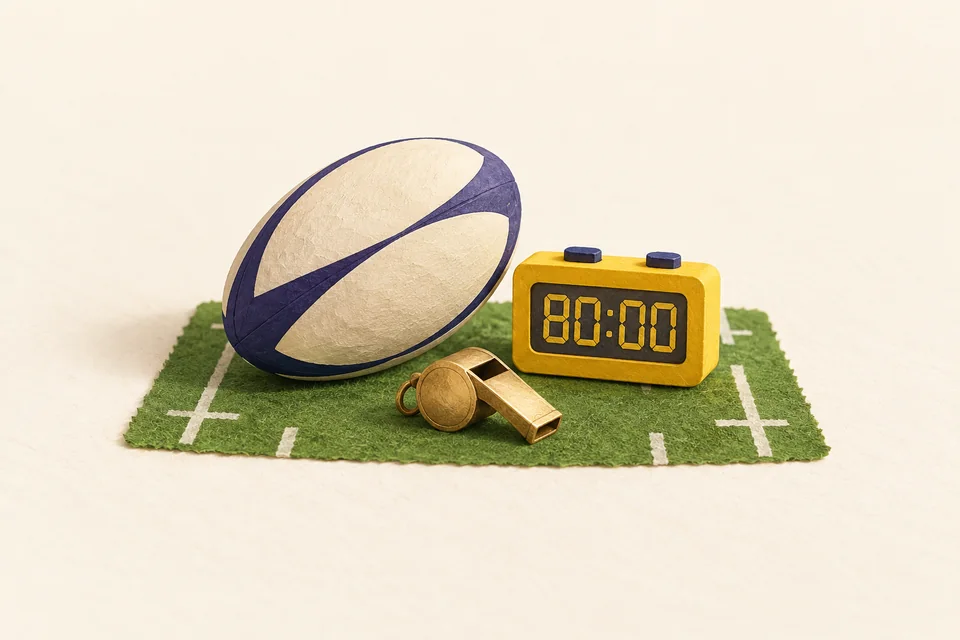
Forty minutes, then do it again
A standard adult, 15-a-side rugby union match has two 40-minute halves: 80 minutes of playing time. That is the usual format under World Rugby’s time laws.
It sounds like a reliable plan for your evening. Then the clock reaches 80:00, the ball is still moving, and nobody seems ready to leave.
The evening lasts longer than the clock
Half-time and stoppages make the time from kick-off to the final whistle longer than 80 minutes. Under the usual law, half-time can last up to 15 minutes; the organiser sets its length.
The referee keeps time and allows for lost time. There is no single guaranteed finishing time for every match.
80:00 is not a stop button
Normally, a half ends when the ball next becomes dead after time expires. There are exceptions, including certain penalties, restarts and a conversion after a try.
Picture a team still passing the ball at 80:00: play can continue. Even a stoppage does not always end it immediately. The referee decides when the half is over.
Sevens is a much shorter appointment
Rugby sevens normally has two seven-minute halves: 14 minutes of play. That is a different format, not an unusually speedy 15-a-side match. Other rugby codes have their own rules too.
Sports clocks have personalities. Compare football’s 90 minutes and added time, or discover when tennis players swap ends.