
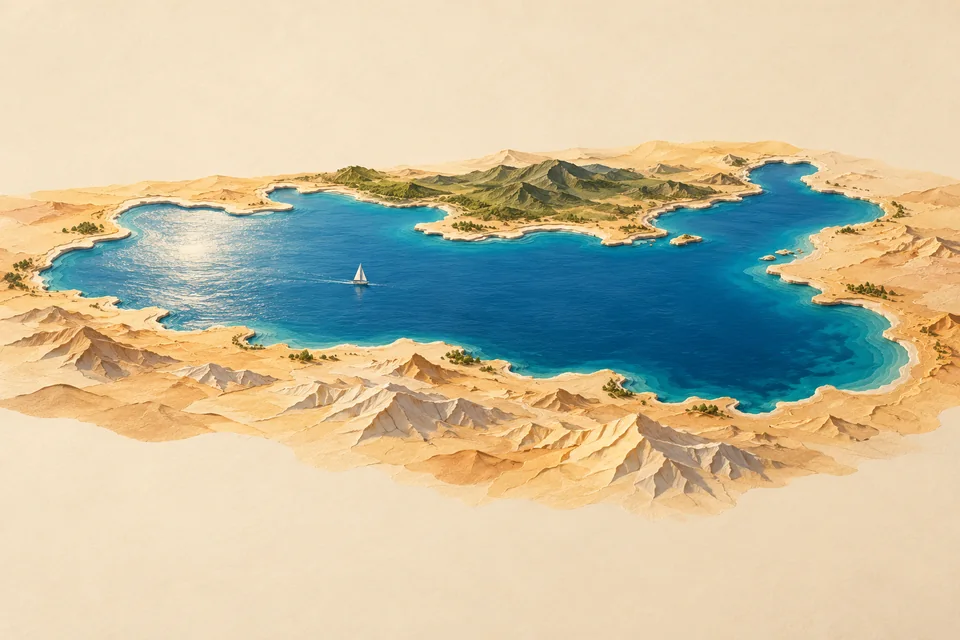
The name is a small trap
In geographical terms, the Caspian Sea is a lake: it is surrounded by land and has no natural outlet to the ocean. It is also salty and enormous. The name does a very convincing job of sending you in the wrong direction.
NASA describes it as the world’s largest inland water body by surface area. That is quite a lake to overlook.
Follow the water, not the label
Rivers flow into the Caspian, including the Volga. But there is no natural river carrying its water onwards to the ocean.
Water escapes through evaporation, leaving salts behind. So “lake” does not automatically mean fresh water. The Dead Sea has a similar naming surprise.
Five countries share the shore
The Caspian borders Russia, Kazakhstan, Turkmenistan, Iran and Azerbaijan, as NASA’s view of the surrounding landscapes shows.
Its northern waters are shallower and fresher than those in the south. It is one continuous body of water, but a journey along it passes through very different conditions.
An old sea left a lake behind
The name is not the only link with the sea. NASA explains that the Caspian once belonged to a much larger prehistoric sea. Changes in the land and sea level eventually left it isolated.
For the opposite sort of coastal surprise, meet a fjord: a glacier-carved valley filled by the sea. A blue shape on a map can hide quite a story.