
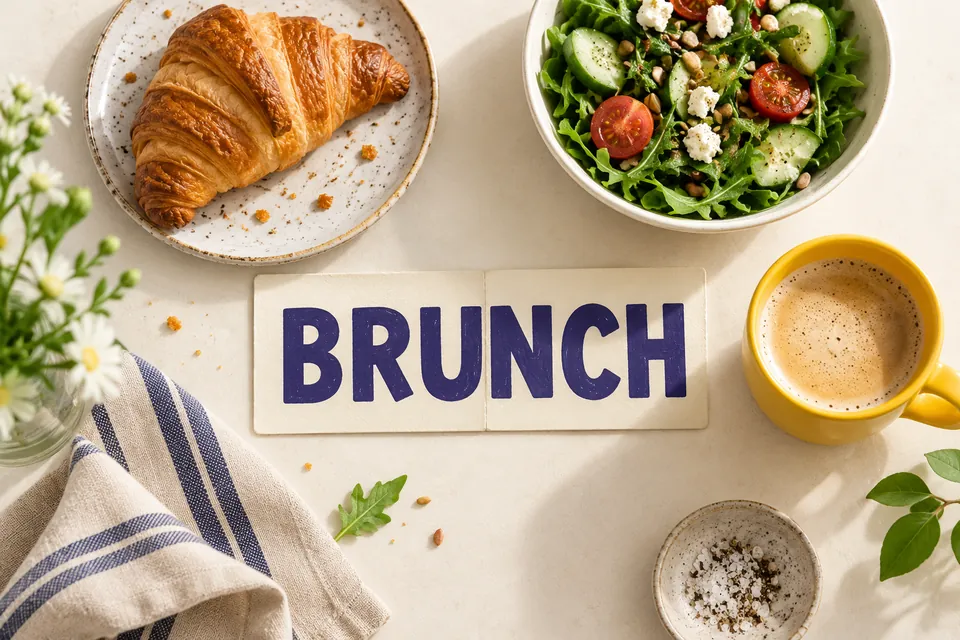
Two words, one late breakfast
A portmanteau blends parts and meanings of two or more words into one. Brunch combines breakfast and lunch. You may also see these words called blends.
Imagine waking up too late for breakfast but feeling far too hungry to wait for lunch. The meal sits between the two, and its name does the same. Merriam-Webster records both parent words.
Look at the spelling: br- from breakfast meets -unch from lunch. The original words have been trimmed to make something new.
A meal, a haze and a very practical fork
Three portmanteau examples you might already use:
- Brunch = breakfast + lunch. Two meals squeeze into one name.
- Smog = smoke + fog. The blend is recorded in the word’s etymology—its word history. It explains the name, rather than every kind of smog today.
- Spork = spoon + fork. A scoop with little prongs: the utensil and its name both combine two things.
You do not need to remember the long label to enjoy spotting the shorter words inside.
The letters are allowed to disappear
Unlike an anagram, a portmanteau does not keep every original letter. Breakfast and lunch have fourteen letters altogether; brunch has six.
Nor is every joined word a blend. Toothbrush keeps tooth and brush whole: it is a compound word. Brunch cuts into its ingredients. That makes a useful first clue when you meet an unfamiliar example.
A tiny word puzzle for the next coffee break
Before looking below, ask yourself: which two words are hiding inside spork, and which parts survive?
Unpack the spork
Sp- comes from spoon and -ork from fork. The name keeps a piece of each, just as the object keeps a feature of each.
Now invent a name for a snack that is half breakfast, half dinner. Your suggestion does not have to be a dictionary word. Treat it as wordplay—and see whether someone else can guess your ingredients.