
A nose and a skirt
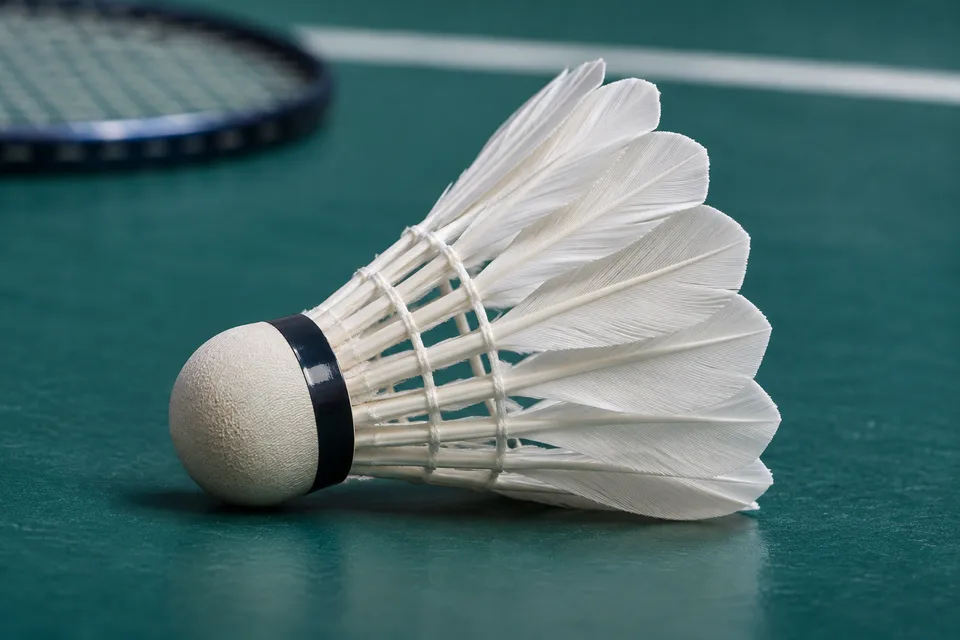
A shuttlecock is the light object players hit over the net in badminton. It has a rounded nose at one end and a wide skirt at the other. After a hit, air pushes against that skirt and helps turn the shuttle nose-first.
The Badminton World Federation’s equipment rules specify 16 feathers on a feathered shuttle. They also allow a skirt made of synthetic material.
Why it turns around
Imagine a shuttle flying towards your racket, cork first. You hit the cork back towards your opponent. For a moment the shuttle can be travelling skirt-first. Watch a slow-motion replay and you can see it turn over.
Caroline Cohen and colleagues filmed this flip. They explain that the shuttle’s mass is concentrated towards the nose, while air resistance acts further back. When the shuttle tilts, that separation gives the air a way to twist it back into line, with the nose leading.
Why a hard hit slows down
The wide skirt also gives the air plenty to push against. That resistance, called drag, slows a shuttle rapidly after a hard hit. A fast launch can end in a steep drop on the far side of the net.
Compare that with a dimpled golf ball. Its surface helps it travel farther, while a shuttle’s broad skirt helps keep the flight short enough for a badminton court.