
Listen to the badgers
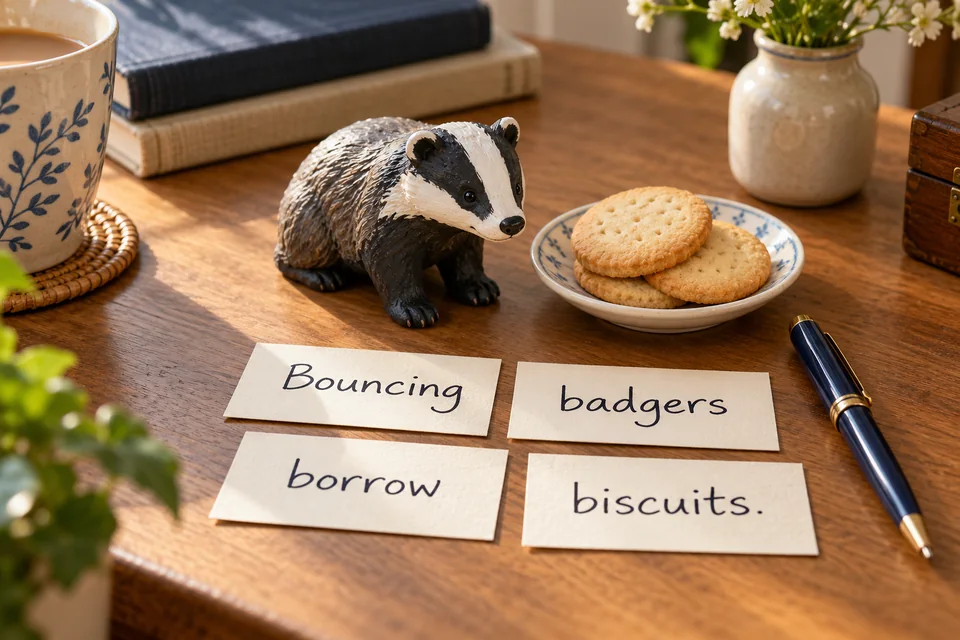
Alliteration is the repetition of starting sounds in nearby words, especially consonants. Think of Bouncing badgers borrow biscuits. Those repeated b sounds give our imaginary snack theft a playful beat.
Cambridge Dictionary defines alliteration through sound. The words do not have to describe anything sensible. Fortunately for our badgers, silliness is welcome.
Your ears get the deciding vote
Matching letters are a clue, but pronunciation matters. Photo and fish start with different letters and the same f sound.
Now compare cat and city. Both begin with c on the page, but their opening sounds differ. Reading the words aloud reveals what the spelling hides.
A small pattern is enough
You do not need a whole sentence of matching starts. Nearby words can make the pattern, with other words between them. Badgers borrow the biscuits still has its repeated beginning.
The Academy of American Poets describes alliteration in ordinary speech, poetry and nursery rhymes. It is a small sound effect that can fit into a much larger sentence.
Change one word, hear the difference
Compare Badgers borrow biscuits with Badgers take biscuits. The snack has not changed; the little run of matching sounds has.
For another way words play with your ears, meet words that imitate sounds. Or try spoonerisms, where swapped sounds produce a different kind of surprise. English has plenty of ways to make a sentence misbehave.