
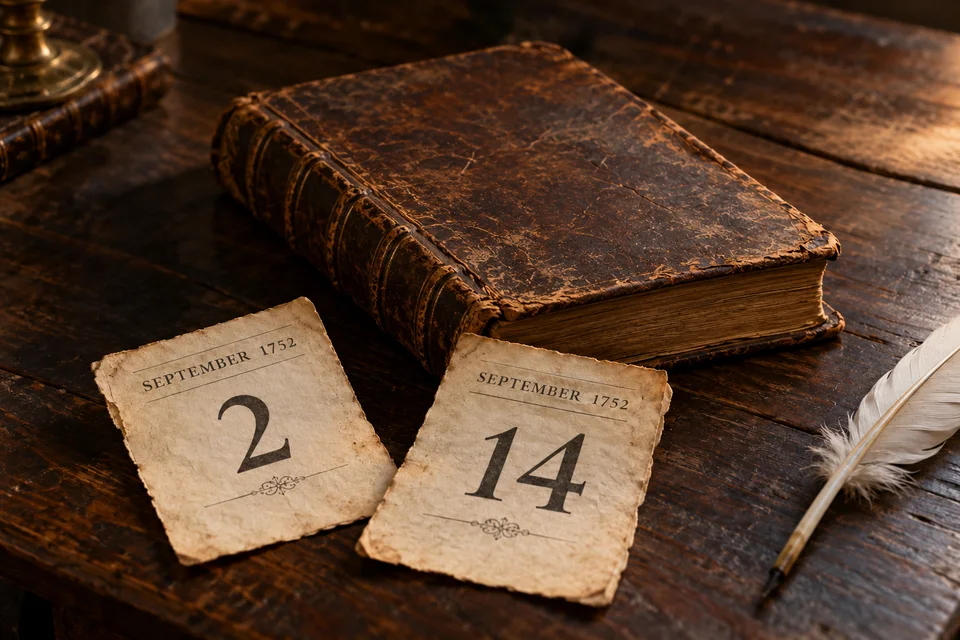
The next morning had a surprising date
Imagine writing 2 September 1752 in your diary before bed. When you wake up the next morning, the official date is 14 September.
That is what happened when Britain changed its calendar. Only one night had passed. The numbers on the calendar changed; time did not jump.
Two calendars had stopped agreeing
A calendar is a way of putting dates on days. Britain was using one called the Julian calendar. Many other places were using a newer one, the Gregorian calendar.
The two calendars had different leap-year rules. Over many years, the difference grew until they were eleven days apart.
Britain switched to the newer calendar. To bring its dates into line, the law said that the day after 2 September would be called 14 September.
The new leap-year rules helped stop the same problem building up again. You can explore them in the story of 2100’s missing leap day.
Which dates were left out?
The calendar went from 2 straight to 14. The missing date labels were 3, 4, 5, 6, 7, 8, 9, 10, 11, 12 and 13 September: eleven labels in all.
Imagine changing the page number in a notebook from 2 to 14. You have changed the label on the next page, not created eleven extra pages to read.
You go to bed on 2 September 1752 in Britain. What date is it next morning?
14 September 1752. One ordinary night has passed.
What changed, and what stayed the same?
| Changed | Stayed the same |
|---|---|
| The next date was 14 September instead of 3 September | One day still followed the previous day |
| Eleven date labels were skipped | People did not live through eleven extra nights |
Other countries changed at other times
This was not a worldwide switch on one morning. Different countries adopted the new calendar at different times.
That is why an old date makes more sense when you also know where it was written and which calendar people used there.