
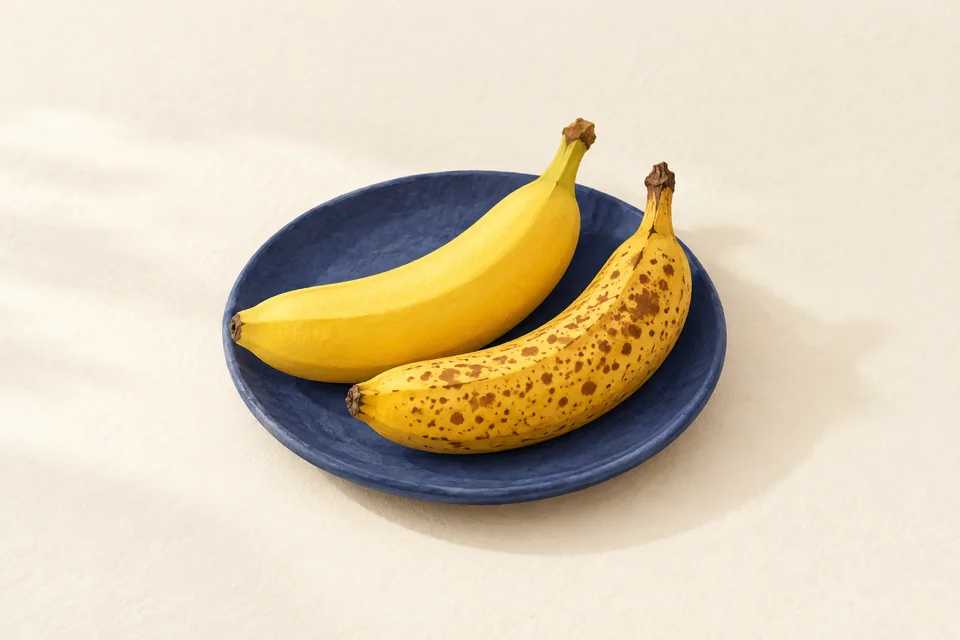
Those freckles are chemistry
Bananas turn brown as dark pigments form in their tissues. One important process is enzymatic browning: an enzyme called polyphenol oxidase helps plant compounds react with oxygen.
Research on banana peel browning examines this chemistry. The fruit bowl has a little more going on than a collection of slowly changing colours.
A bruise can hurry things along
Damage to cells lets substances that were kept apart meet and react. That helps explain why browning can appear around a bruise.
A bump can also brown the flesh without an obvious mark on the outside, as UC Davis’s banana fact sheet notes. A banana’s jacket does not tell its entire story.
Why does the fridge darken the peel?
Bananas are sensitive to cold. Low temperatures can cause chilling injury, which includes discolouration of the peel and, in more severe cases, browning of the flesh.
The effect depends on the banana’s variety, ripeness, temperature and time in the cold. A dark peel is not simply a timer counting the days since you bought it.
Sweetness has its own story
As bananas ripen, starch turns into sugars. Sweetness and peel colour reflect changes in the fruit, but they are not the same measurement.
Next time you spot a freckled banana, there is a chemistry story beside your cereal. For two more kitchen surprises, discover what makes popcorn jump and how an egg becomes a cloud of meringue.