
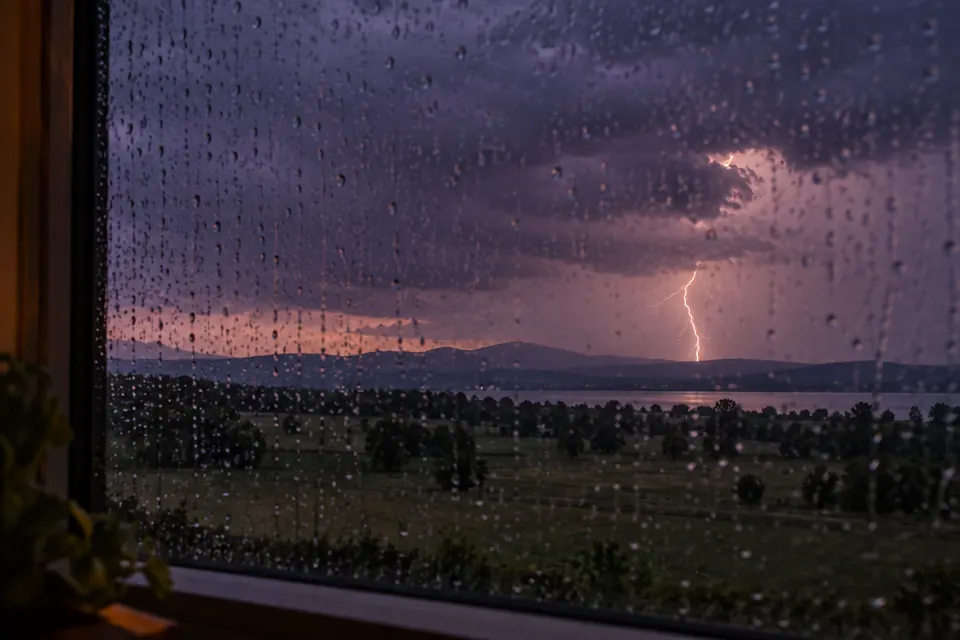
The same strike, two different speeds
Lightning flashes, then thunder rolls in a few seconds later. Both come from the same event, but light travels much faster than sound.
Over the distances involved, the flash reaches you almost instantly. Sound takes about three seconds to travel a kilometre, or five seconds to travel a mile. The longer the pause, the farther away the lightning was.
What a nine-second delay means
For an estimate in kilometres, divide the number of seconds by three. A nine-second gap gives 9 ÷ 3 = 3 kilometres.
For miles, divide by five: 9 ÷ 5 = 1.8 miles. These are rough estimates in different units, so they will not convert exactly. They indicate the distance to the lightning, rather than the size or position of the whole storm.
Take shelter when you hear thunder
Counting seconds is a way to understand the science, not to decide whether it is safe to stay outside. If you hear thunder, take shelter in a substantial building or an enclosed vehicle with a metal roof and closed windows.
The US National Weather Service advises waiting at least 30 minutes after the last thunder before leaving safe shelter. Practise the calculation with the examples here rather than going outside to observe a storm.
Try the calculation
In an example with a 15-second delay, about how far away is the lightning?
About five kilometres: 15 ÷ 3 = 5. In miles, the estimate is 15 ÷ 5 = 3.
If the delay were half as long, the estimated distance would also be half as far. That is a handy way to check the calculation.