
A small electrical change
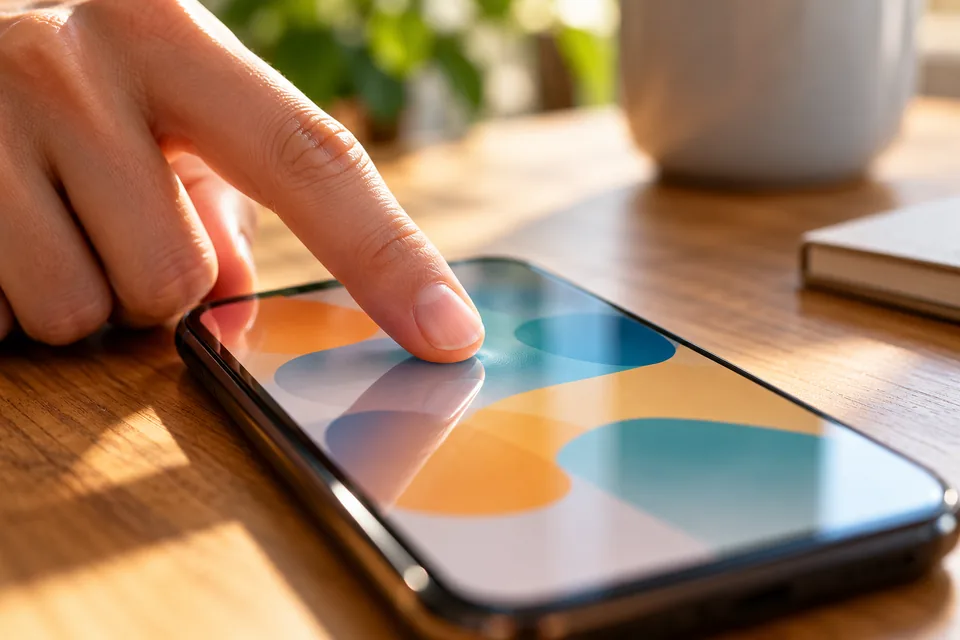
Many modern touchscreens locate your finger by detecting a change in capacitance: the electrical behaviour of a sensor beneath the glass. Pressing harder is not the main signal.
Touchscreen maker DMC describes a grid of transparent electrodes. Your approaching finger changes the readings around one part of that grid, letting the device locate the touch.
The glass is only the surface
The sensor works through the transparent covering. The screen does not need a separate mechanical button beneath every letter on a keyboard.
That makes the same patch of glass useful for a game, a map or a message. The displayed controls change while the underlying sensor keeps watching for touches.
Some screens do feel pressure
Resistive touchscreens work differently. Pressure brings separated conducting layers into contact, as HP’s comparison explains.
So “a touchscreen” names several technologies, not one universal trick. Next, discover how a scanner reads a barcode: another everyday interaction with a hidden pattern.