
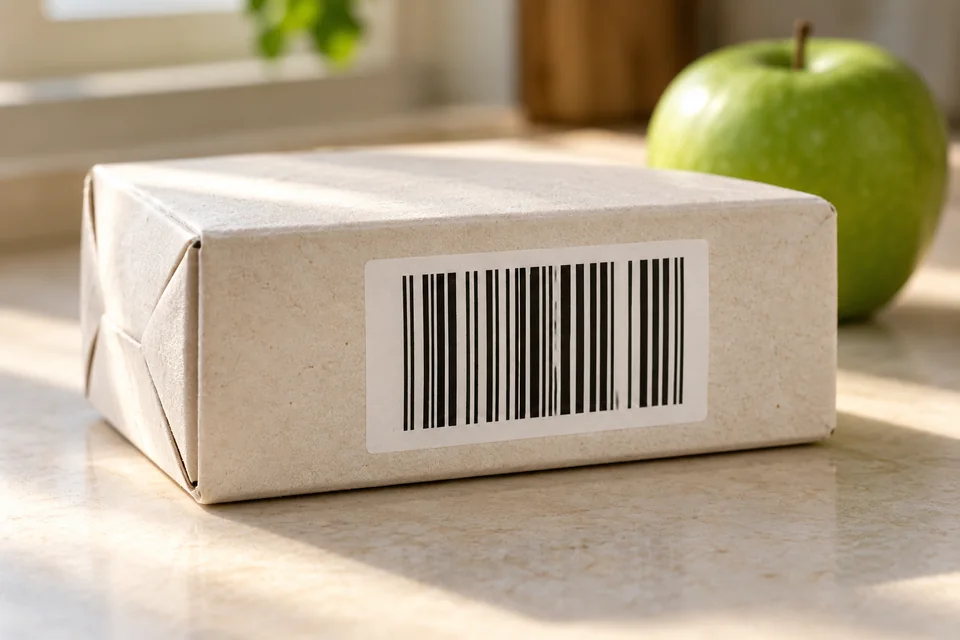
From stripes to a number
A barcode works by turning a pattern of bars and spaces into information a scanner can read. On ordinary supermarket packaging, that information is usually a product identification number.
It is a shortcut for the till: recognise the pattern, read the number, find the product. The checkout beep makes a very quick introduction.
The spaces count too
Both the bars and the gaps matter. Their pattern gives the scanner something to decode. GS1 explains how the familiar retail barcode represents a GTIN, short for Global Trade Item Number.
The digits printed underneath are a human-readable version of that identifier. The stripes are there for the scanner; the number gives people another way to read it.
So where is the price?
GS1 says the description and price are generally retrieved from a database. The barcode usually points to that information rather than carrying a tiny price list.
There are exceptions, including specialist codes for goods sold by variable weight and some coupons. So “barcodes never contain prices” would take the idea too far.
Two bottles can share a code
Two identical bottles of the same drink and size can carry the same GTIN. It identifies the product type, not a unique personal name for every bottle.
For more clever things hiding in plain sight, discover how a zip joins its teeth and why a pen needs a tiny ball.