
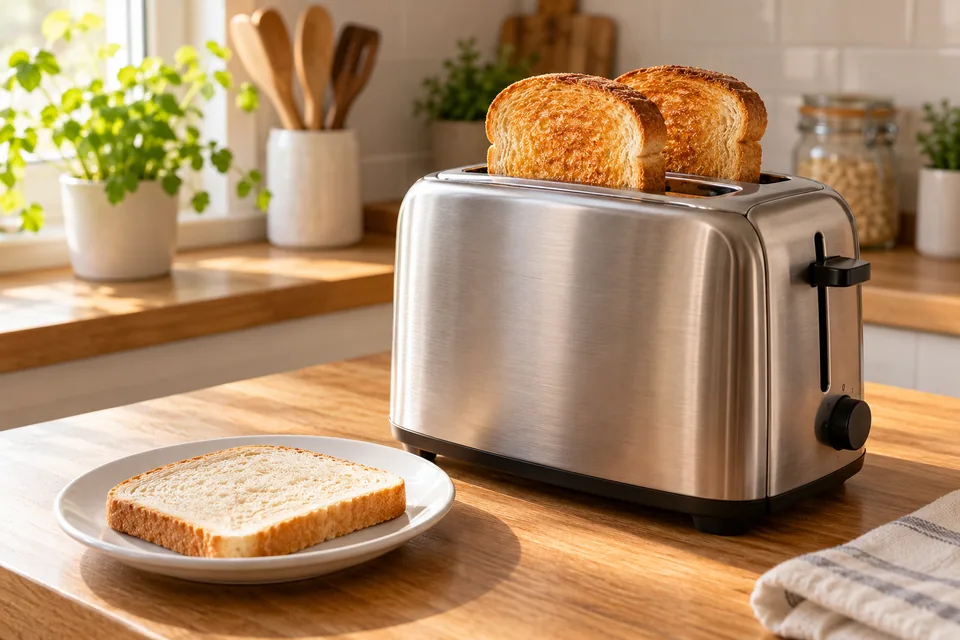
Bread meets an electric heater
A toaster uses electrical heating elements beside the bread. When current flows through them, electrical energy becomes heat, warming and browning the slices.
No flame is needed. The same broad principle appears in other electrical heaters: a material resists the current and becomes hot. OpenStax explains this conversion into thermal energy.
The wires beside your toast
In a conventional toaster, the elements spread heat across the bread rather than warming one tiny spot. Dualit describes the wire-wrapped elements inside its toasting slots.
Those hot surfaces send energy towards the bread. The resulting toast can be crisp and brown even though the appliance has no little fire hiding under breakfast.
Does every element glow red?
No. KitchenAid notes that some modern toaster elements do not glow brightly. A visible orange glow is not a requirement for the appliance to toast.
It is easy to confuse the effect we can see with the mechanism doing the work. The bread is receiving heat either way.
Is setting three always three minutes?
There is no universal rule. Controls vary: some use a timer; Breville’s Eye Q model can monitor the bread’s colour. A setting number alone does not promise a fixed number of minutes.
Compare that direct heating with a microwave’s turning plate, or explore more clever ideas hidden in ordinary objects. Breakfast has quite a supporting cast.