
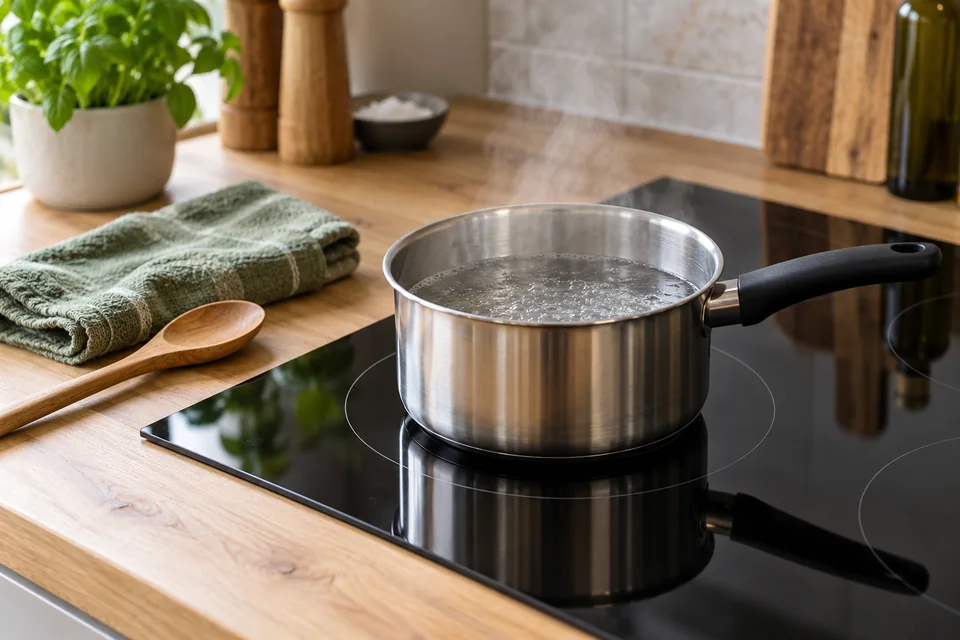
The pan joins in
Induction cooking uses a changing magnetic field to generate heat in a suitable pan. The hot pan then heats your food. The appliance is called an induction hob in Britain and an induction cooktop in the US.
There is no gas flame underneath your soup. The pan itself has become part of the heating system. Quite a promotion for a saucepan.
Why will some pans not work?
The base needs a suitable magnetic material, such as cast iron or certain stainless steels. Plain glass, copper or aluminium alone will not do the same job.
The US Department of Energy suggests a magnet check: if a magnet sticks to the flat base, the pan may be suitable. Check its induction label and the hob’s instructions too.
No flame does not mean cold
The hot pan can heat the glass beneath it. Bosch warns about this residual heat, so a dark cooking zone is not proof that it is safe to touch.
For another kitchen trick, discover how a toaster heats your bread, or explore why a microwave spins dinner.