
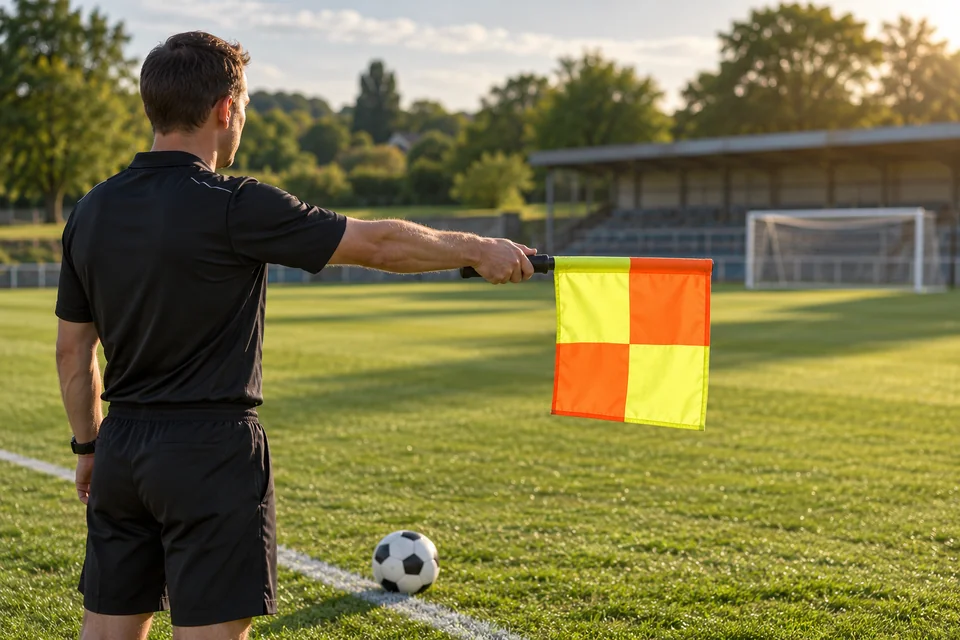
Position is only half the story
An offside offence combines an attacking player’s position when a team-mate plays or touches the ball with their involvement in play.
Simply standing beyond opponents is not automatically an offence. The IFAB’s simple explainer makes that distinction. The sofa argument needs more than a freeze-frame of someone near the goal.
Count the ball and the opponents
Under Law 11, an offside position means part of the head, body or feet is in the opponents’ half, beyond halfway, and nearer their goal line than both the ball and the second-last opponent.
Level is onside. Hands and arms do not count. Count opponents, not just outfield defenders: the goalkeeper is not guaranteed to be the last one.
Freeze the pass, not the arrival
Use the first contact when the team-mate plays or touches the ball. For a goalkeeper’s throw, use the moment of release instead.
An attacker who is onside at that moment can run past opponents before receiving the pass. Looking only at where they receive it misses the important moment.
Getting involved changes the decision
The player must become involved: for example, by playing the ball or clearly blocking the goalkeeper’s view so they cannot play it.
There is no offside offence when receiving the ball directly from a throw-in, goal kick or corner kick. Rebounds, saves and deliberate opponent touches have extra rules in the full law.
Next, discover why football’s cards are red and yellow.