
A tiny bargain on the doorstep
“Trick or treat” asks for a treat with the playful suggestion that refusing could bring a prank. That is the bargain built into the phrase, as Merriam-Webster’s definition explains.
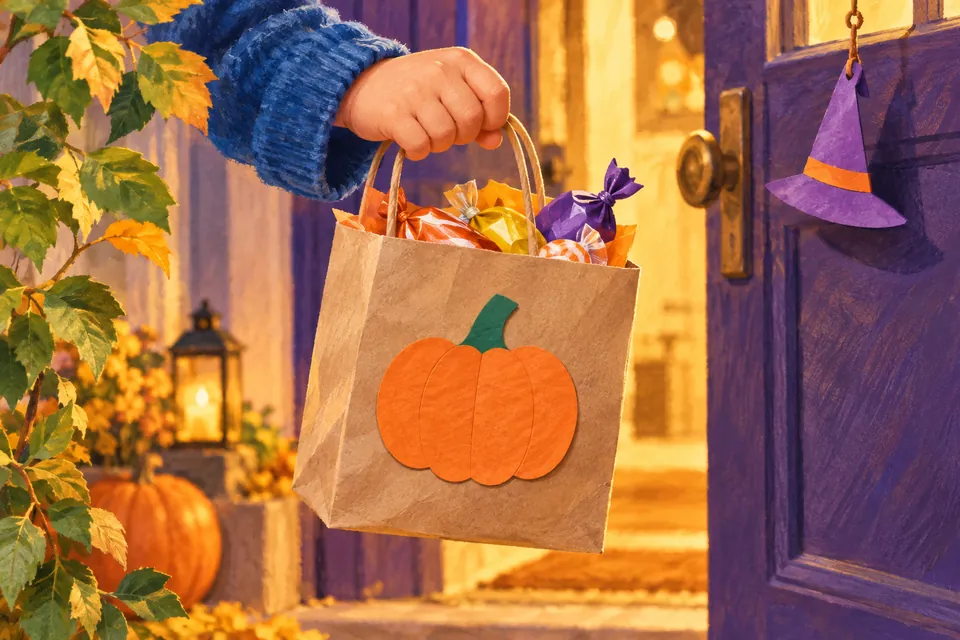
Three short words do the work of a much longer speech. The costume and hopeful bag provide the rest of the message.
Costumes came with other customs
Dictionary.com links modern trick-or-treating with older customs such as guising and mumming in Britain and Ireland. Visitors in costume might offer a rhyme, story or little performance in exchange for food.
That is a different sort of exchange from simply holding out a sweet bag: the visitor brings a bit of entertainment.
The surprising Thanksgiving connection
The Library of Congress documents Thanksgiving masking, an older American custom in which costumed visitors went door to door asking for handouts.
Folklorists have suggested that it helped shape Halloween trick-or-treating. The Library also warns against giving this changing tradition one simple ancient origin. Similar customs are not proof of one uninterrupted family tree.
A phrase you can carry in a pocket
The neat bit is the word or. It turns a request into two possibilities, making the phrase sound like a miniature negotiation. The fun is in the familiar ritual.
Halloween has other well-travelled stories, including why pumpkin lanterns began with turnips. The words and the decorations both picked up changes along the way.