
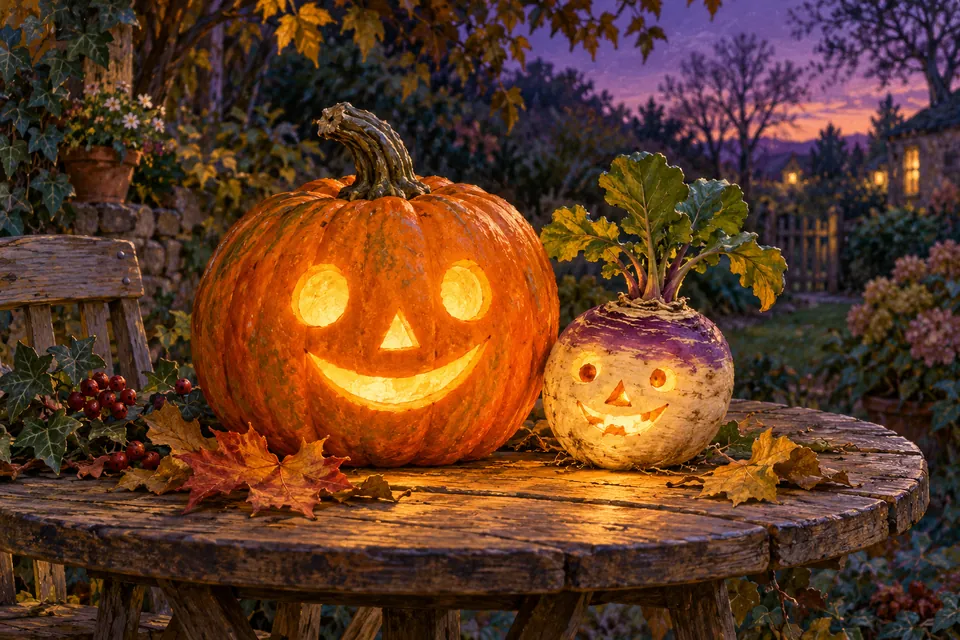
Before the pumpkin
Halloween pumpkin carving developed from an Irish tradition of making lanterns from turnips. The pumpkin version took shape in North America, where pumpkins were available and became the familiar orange face of Halloween.
So the pumpkin got the starring role. A rather alarming root vegetable did some of the earlier work.
A clue in a museum
The National Museum of Ireland’s ghost turnip records the older custom. In 1943, a teacher sent the museum a turnip lantern from County Donegal, explaining that people there had made that type around 1900.
The display object is a painted plaster model made by museum artist Eileen Barnes. It is not a vegetable that somehow stayed fresh for a century.
Who was Jack?
One Irish tale retold by Clemson Extension follows Stingy Jack, a trickster refused entry to both Heaven and Hell. He wanders with a glowing ember inside a hollow turnip.
That is folklore, not the biography of a proven lantern inventor. It explains the name jack-o’-lantern through a story with an excellent spooky prop.
An orange change of cast
Irish immigrants carried their traditions to North America, where pumpkins offered another way to make the lantern. The custom changed materials as it travelled.
That makes the smiling pumpkin a small story about migration as well as Halloween. Next, discover why another familiar Halloween ritual begins with the words “trick or treat”.