
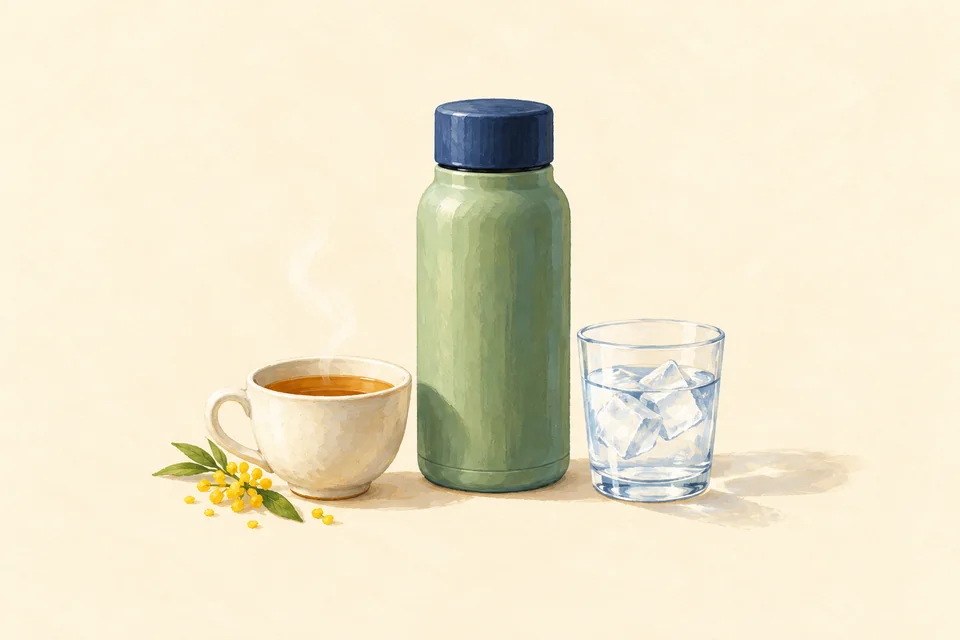
A bottle with a useful gap
A vacuum flask is a container with two walls and much of the air removed from the gap between them. This greatly slows heat transfer, helping hot drinks stay hot and cold drinks stay cold.
The clever part is something you cannot see from the outside: a space with very little in it. Your tea has acquired a rather unusual coat.
Less air, less heat on the move
OpenStax explains three ways heat travels: conduction through matter, convection through moving fluids, and radiation.
With very few particles in the gap, much less heat travels across it by conduction or convection. Radiation can still cross a vacuum, so reflective surfaces can help reduce that route too. The flask slows heat transfer; it does not stop it completely.
How does it know which drink is inside?
It does not need to. The same insulation slows heat escaping from a hot drink and entering a cold one. Thermos describes this two-way job for its vacuum-insulated products.
It is a different trick from heating food in a microwave: an ordinary vacuum flask is preserving a temperature, not supplying energy to create one.
A laboratory idea went on a picnic
The Royal Institution’s flask from 1892 was made for James Dewar’s low-temperature research. It helped keep liquefied gases cold enough to study.
The flask was first exhibited there on Christmas Day that year. A laboratory problem eventually gave lunch bags a useful companion. For another ordinary object with an unexpected past, meet bubble wrap’s wallpaper ambitions.