
Yes, it was meant for your walls
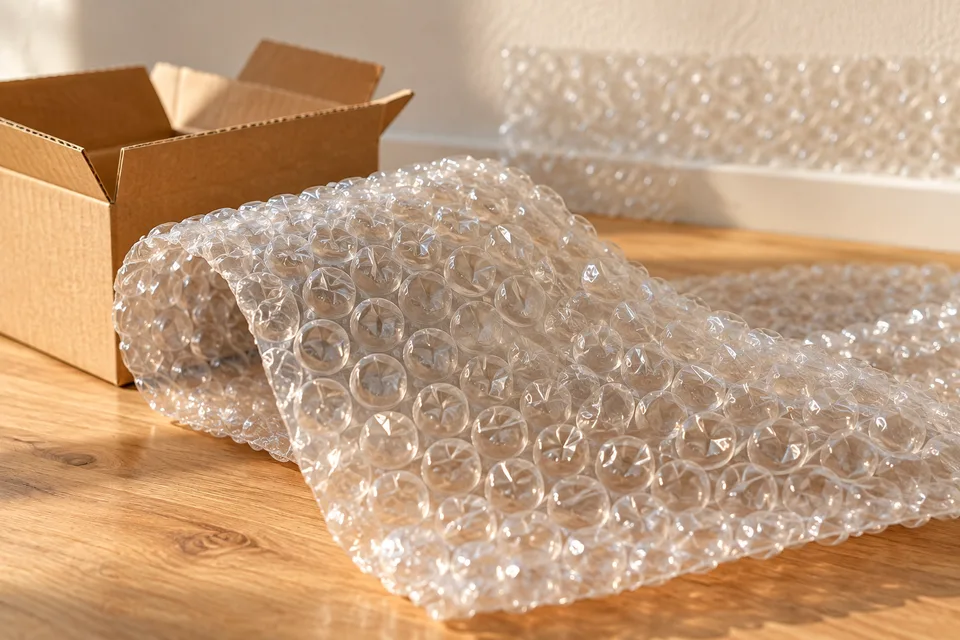
Imagine covering a living-room wall with the little air pockets you usually find inside a parcel. Strange as it sounds, that was the original idea behind bubble wrap.
In 1957, engineers Alfred Fielding and Marc Chavannes set out to make textured wallpaper in Hawthorne, New Jersey. They joined layers of plastic with air trapped between them. According to Sealed Air’s account of its beginnings, home decoration was the goal.
The walls could wait. Parcels needed it.
The wallpaper idea did not take off, but the material had another use: cushioning objects during shipping.
Fielding and Chavannes founded Sealed Air in 1960, with Bubble Wrap as its signature product. The invention had found a different home, inside packaging rather than on a wall.
That explains why two dates appear in its history: 1957 for the original experiment and 1960 for the company’s founding.
An ordinary object with an unexpected beginning
A roll of packing material does not look much like a decorating experiment. Yet the same feature that gave it texture, those pockets of air, helped give it a new purpose.
The next time you unwrap a parcel, picture that sheet on a living-room wall. It is a surprisingly good reminder of where the story started.
One question before you go
What were bubble wrap’s inventors originally trying to make?
Textured wallpaper. Protective packaging came later.