
Two ways to show one idea
Dual coding means combining words with relevant visuals, such as a picture, diagram or timeline, to represent the same information. The point is to connect the two, rather than decorate your notes.
Think of a useful sketch beside an explanation. Each gives you a way into the idea; neither needs to win an art prize.
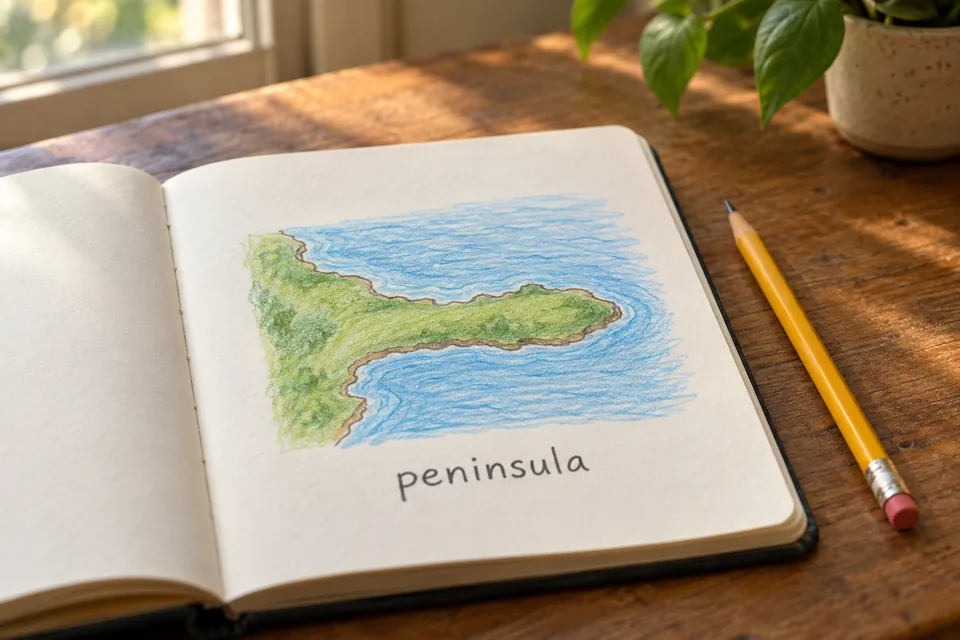
A peninsula on paper
Take the word peninsula: land almost surrounded by water, but still attached to a larger land area.
Now picture a simple coastline sketch with blue water around a green tongue of land. The sentence explains the relationship; the drawing shows it. Together, they make clear why a peninsula is not an island.
Make the picture earn its place
The Learning Scientists suggest comparing a visual directly with the words. Can you explain how one represents the other?
A timeline can show the order of events. A diagram can show where parts belong. A cheerful sticker beside a paragraph may look lovely, but it does not necessarily explain the paragraph.
It is not a learning-style label
This does not mean you have to identify yourself as a “visual learner”. The Learning Scientists distinguish dual coding from matching lessons to supposed learning styles.
Choose a visual that suits the topic and keep it simple. If a page feels like a juggling act, our short explanation of cognitive load shows why adding more is not always helpful.