
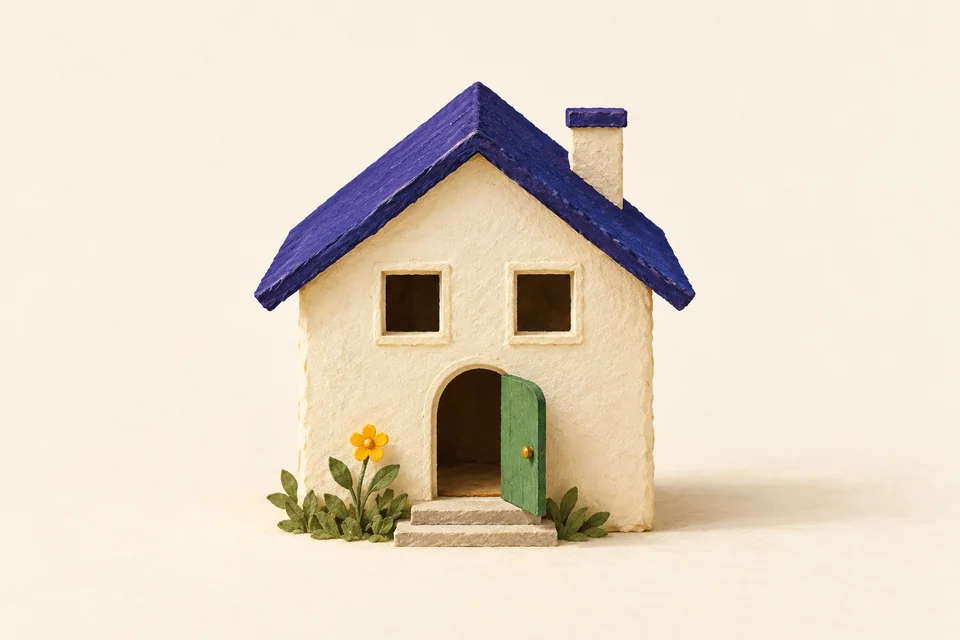
Is that house looking at you?
Two upstairs windows. An open doorway below. Suddenly, the house looks surprised to see you.
Face pareidolia is seeing a face in something that is not one, such as a building, a tree trunk or a cloud. It is one kind of pareidolia: finding a recognisable pattern in something ambiguous. The face is your interpretation of the object’s features.
A familiar arrangement
Human faces vary, but their features follow a familiar arrangement. Two eye-like shapes above a mouth-like shape can be enough to suggest a face.
UNSW researchers tested face-like objects and found evidence that they recruit some of the same visual mechanisms used to read where human faces are looking. A pair of windows can make quite an impression.
Why does the tree look grumpy?
We can read an expression into the pattern, too. A University of Sydney study mixed real faces with face-like objects and asked people to judge their expressions. Similar biases appeared in both kinds of judgment.
Knowing it is a tree does not necessarily make the apparent face disappear. You can recognise the object and still see the scowl. The tree has not developed an opinion about your shoes.
Give the ordinary a second look
A building’s windows remain windows. The extra character comes from how we see them.
If perception has caught your curiosity, try the colour-word mix-up called the Stroop effect. Or explore another everyday surprise: where flamingos get their pink colour. Familiar things have plenty left to tell us.