
A king under pressure
Magna Carta was a royal charter agreed by King John of England and rebel barons at Runnymede in June 1215. Its Latin name means Great Charter.
It was an attempt to settle a dangerous quarrel. A king who expected obedience now faced written limits on his power.
The House of Commons Library explains its origins as a peace agreement, rather than a plan for modern democracy.
A surprisingly short first life
The 1215 agreement was annulled within ten weeks. That is a remarkably brief first outing for a document remembered eight centuries later.
Later kings issued new versions. Its reputation grew around the principle that royal authority could be constrained by law. The medieval charter did not give everyone equal rights or a vote.
Look for the seal
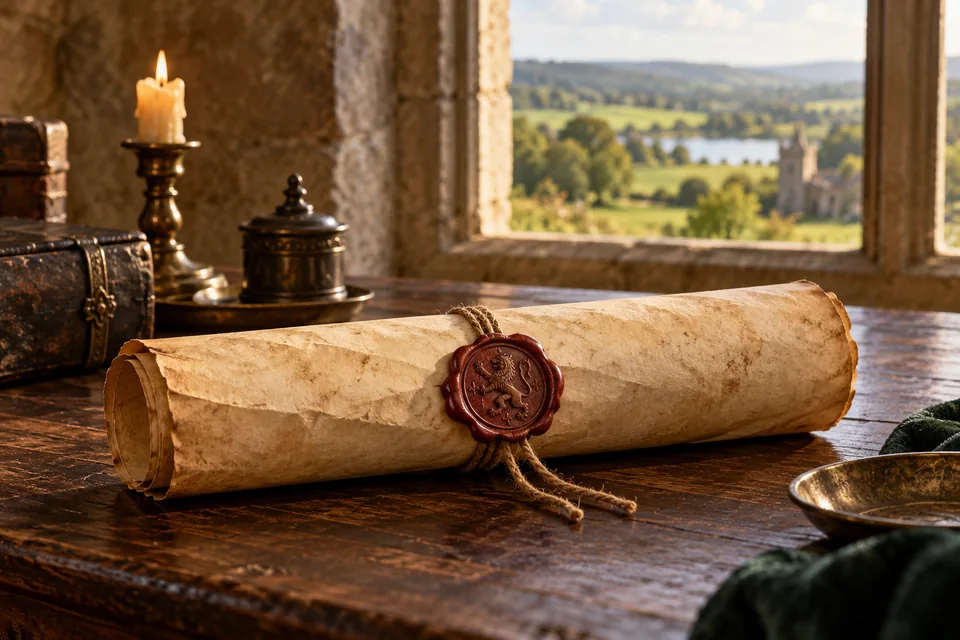
Picture parchment and a wax seal, rather than a king signing a modern contract. The charter was sealed, and its text was in Latin.
For another object whose familiar name needs a closer look, meet the embroidery called the Bayeux Tapestry.
Explore ten short history surprises whenever you fancy another short read.