
A story sewn into cloth
The Bayeux Tapestry is an 11th-century embroidery telling the story of the Norman conquest of England in 1066. It follows events surrounding William, Duke of Normandy, and the Battle of Hastings.
Despite the famous name, it is not technically a woven tapestry. History has slipped a little textile trick into the title.
The thread is the clue
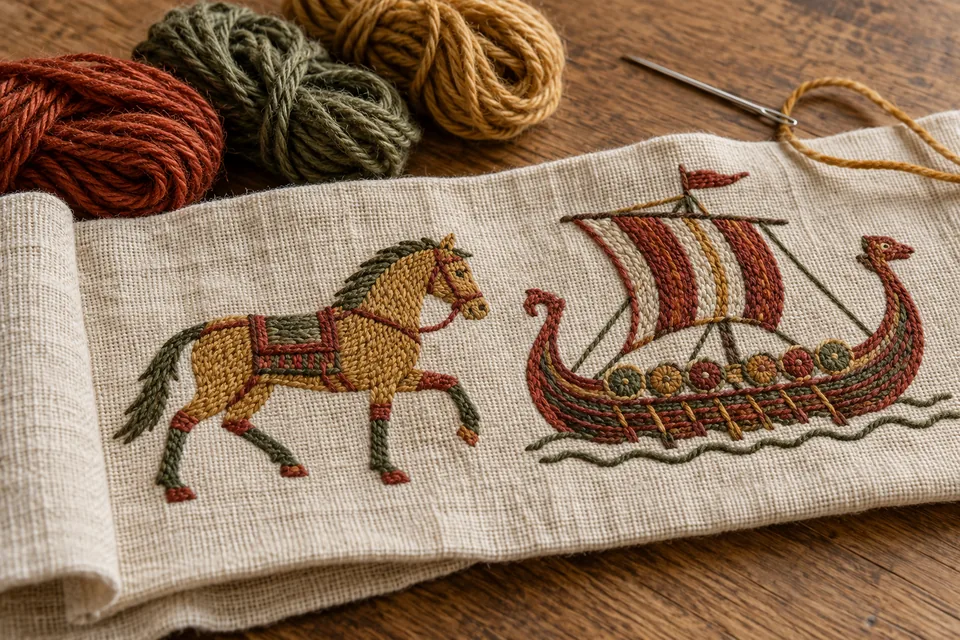
The Bayeux Museum describes wool thread embroidered onto linen cloth. The picture is stitched onto fabric that already exists.
In a tapestry, the design is woven as the fabric is made. Same broad family of beautiful textiles; a different way of making the picture.
A very long picture story
The embroidery is nearly 70 metres long. Ships, horses, soldiers and fantastic creatures turn the events of 1066 into a long visual narrative.
Imagine following a giant picture strip, except the lines and colours are made from wool. The boats and horses help carry the story before you have read a word.
A Victorian encore
Reading Museum has a full-size Victorian replica, completed in 1886. One border figure gained underwear because the photographs used to make the copy had already been retouched.
Even a careful copy can carry a clue about the people who copied it. For another famous museum object with a story to decode, meet the Rosetta Stone.