
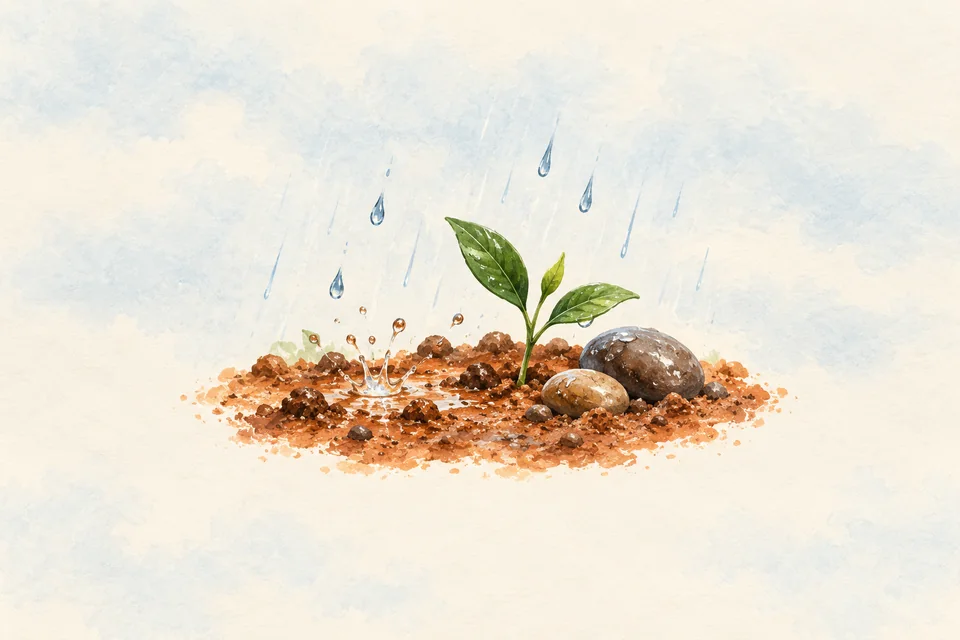
Rain borrows a scent from the ground
Petrichor is the earthy smell associated with rain falling on dry ground. Plant oils and compounds made by soil microbes help create it. The water falling from the sky is not bringing a bottle of perfume.
A familiar smell has a surprisingly busy cast of contributors.
Meet the microscopic perfumers
One earthy-smelling ingredient is geosmin, made by soil bacteria including Streptomyces. The John Innes Centre describes how these bacteria produce it.
So petrichor is not simply another name for geosmin. Think of the rainy-day scent as a mixture, with geosmin playing a part.
The tiny bubbles that help it travel
In 2015, MIT researchers filmed raindrops hitting porous surfaces. Drops trapped little air bubbles, which rose and burst, releasing much smaller droplets called aerosols.
The researchers proposed that these droplets could carry aromatic material from the ground into the air. A breeze could then move it along. This helps explain how a scent can reach your nose without your nose reaching the soil.
A grand name for an ordinary pleasure
CSIRO scientists Isabel Bear and Richard Thomas named petrichor in 1964. Its Greek roots refer to stone and ichor, the fluid of the gods in mythology.
Quite a dramatic name for a damp path. If everyday things keep surprising you, discover why soap bubbles become spheres or why ice floats.