
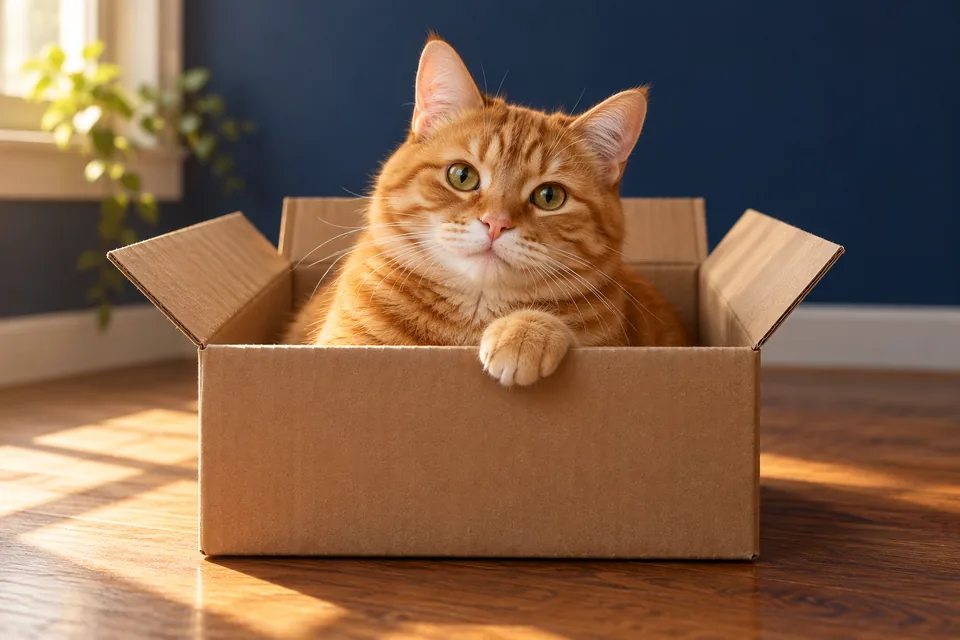
The packaging has a useful feature
One reason boxes can appeal to cats is that they provide somewhere to hide. Research with newly arrived shelter cats supports the value of that concealed space, although it cannot explain every cat's favourite sleeping spot.
Imagine buying an impressive cat bed, only to find the cardboard packaging occupied. To you, it is rubbish. To the cat, it may be a retreat.
A box joined the experiment
A 2019 Dutch shelter trial reported results for 23 cats: 12 had a hiding box and 11 did not. The groups were assigned at random.
Over 12 days, researchers assessed stress using posture and behaviour. Scores fell in both groups, but they dropped faster among the cats with boxes.
An earlier study pointed the same way
The abstract of a 2014 study describes 19 newly arrived shelter cats, randomly divided between groups with and without hiding boxes.
The box group reached lower behavioural stress scores sooner. By day 14, the groups' average scores were similar. The interesting difference was how quickly they settled.
A useful clue, with limits
These were small shelter studies, not a vote by every cat in every home. The 2019 trial did not find a significant difference in weight loss between its groups.
The evidence gives us one sensible explanation: a hiding place can help in an unfamiliar setting. For another ordinary object with a surprising story, discover what happens inside a popcorn kernel.