
The date remembers a failed plot
Bonfire Night marks the failure of the Gunpowder Plot of 1605. As London Museum explains, the celebration began as thanksgiving for the plot being stopped, preserving the king and Parliament.
The plotters planned to blow up the House of Lords during the State Opening on 5 November, when King James I, the Lords and the Commons would be gathered there. As Parliament’s account explains, a search uncovered Guy Fawkes with the gunpowder before the plan could be carried out.
A tradition that outlived its law
In January 1606, Parliament passed the Thanksgiving Act, making commemorative services and sermons an annual event on 5 November.
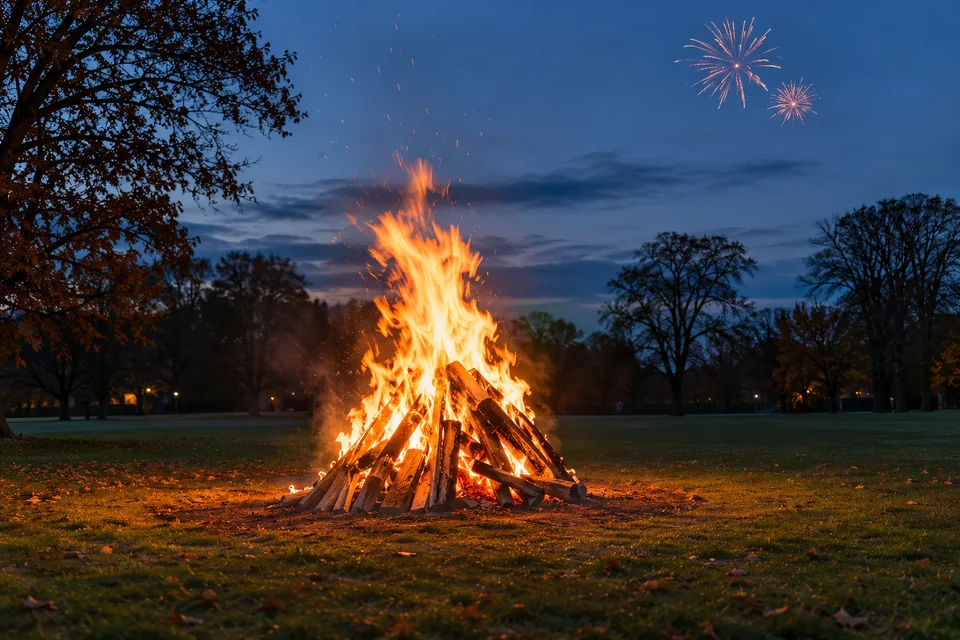
Its history of the celebrations describes church bells, bonfires and fireworks, which featured in some of the earliest festivities.
The tradition also carried religious hostility. Anti-Catholic feeling shaped celebrations, and figures representing the Pope were burned on some bonfires. That history is part of how the custom developed.
The law remained in force until 1859. The custom lasted beyond it: a date established in law became an enduring night of bonfires and fireworks.
Why is it also called Guy Fawkes Night?
Fawkes was one of a group of conspirators. Being discovered with the gunpowder made his name especially memorable; Parliament’s account cautions against treating him as the principal plotter.
Figures known as ‘guys’, associated with Fawkes, later became part of the bonfire tradition. That helps explain the other names for 5 November: Guy Fawkes Night and Fireworks Night.
Displays and bonfires are held on or around the date in Britain. Behind the lights is an anniversary: the stopping of a planned attack more than four centuries ago.