
A pattern with a job
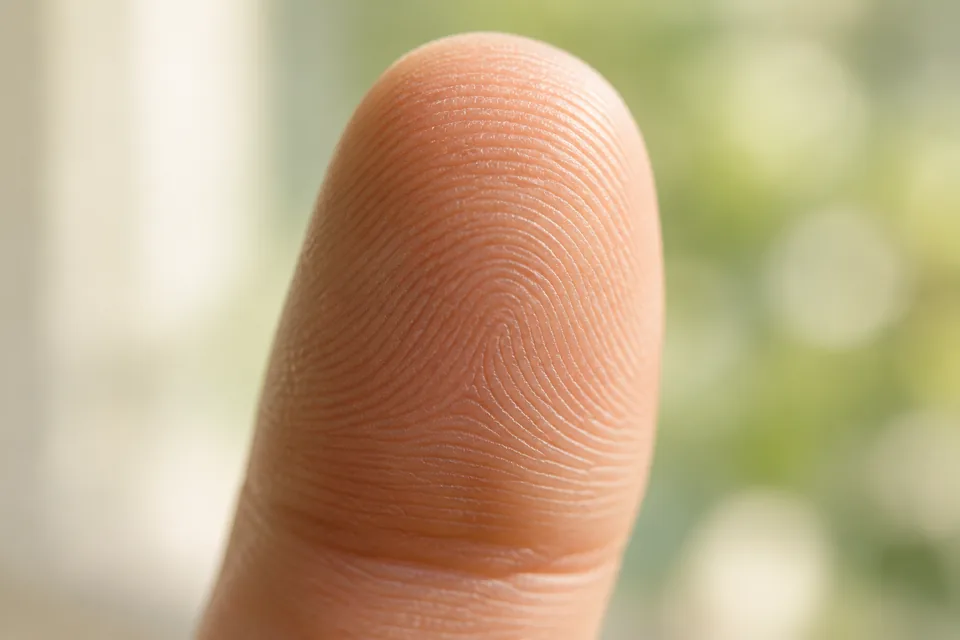
The raised ridges on our fingertips help us handle objects. Research shows that one of their jobs is regulating tiny amounts of moisture where skin meets a surface.
We usually notice fingerprints when unlocking a phone. Those little lines were doing useful work long before anyone invented a lock screen.
The tiny moisture trick
A little moisture can soften the outer skin and improve its contact with an object. Too much can make things slippery.
In a 2020 study of fingertips against glass, researchers found that the ridges and sweat pores helped manage that balance. The University of Birmingham explains how the mechanism supports grip. It is more subtle than simply giving your fingers rougher tread.
Why do the patterns differ?
MedlinePlus explains that fingerprint ridges develop before birth. Genes influence the broad pattern, while conditions during development affect its finer details.
Even identical twins have different fingerprints. Sharing DNA does not mean sharing every tiny loop and ridge.
A little mystery remains
Scientists are still studying exactly how fingerprints work. The glass study explains a grip mechanism; it does not settle every question about their evolution or every surface we touch.
Next time you pick up a glass, spare a thought for the tiny ridges helping you hold it. For another small skin trick, meet the muscles behind goosebumps.