
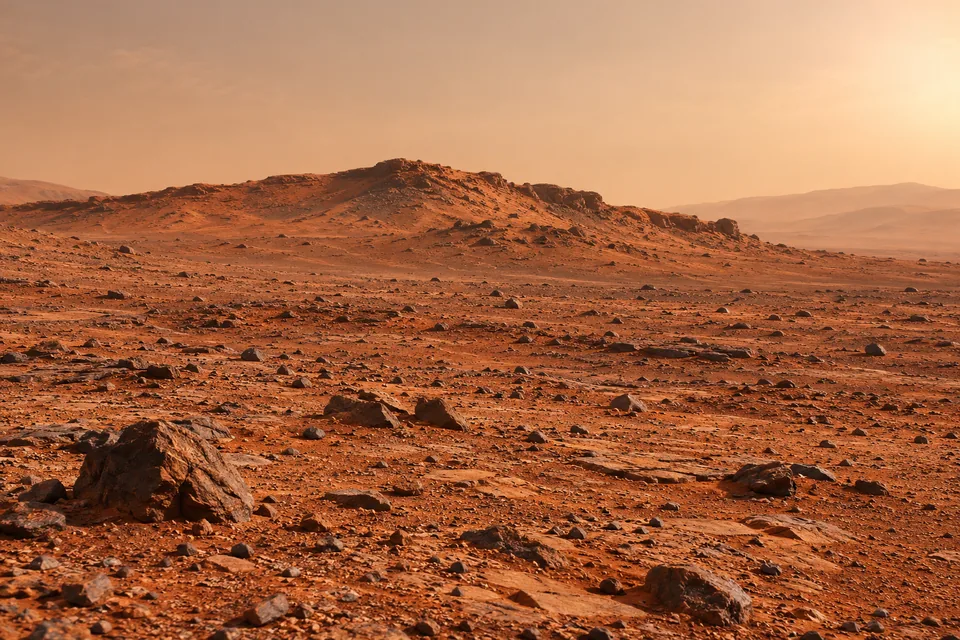
A planet with rusty dust
Mars looks red because iron-bearing minerals in its rocks and dust have oxidised. Winds spread that coloured dust across the planet and into its atmosphere.
NASA’s Mars facts also point out the browns, golds and tans on the surface. The Red Planet has a larger paint box than its nickname suggests.
Which mineral?
A 2025 study reported by NASA suggests that ferrihydrite, an iron mineral containing water, may explain much of the reddish dust.
The team compared spacecraft observations with laboratory mixtures. This is more specific than saying “rust”: different iron minerals can tell different stories about how they formed.
A clue, not a fossil
Ferrihydrite can form in cool, wet conditions. The finding therefore supports a possible link with Mars’s wetter past.
It does not prove that Mars had life, and the proposed explanation still needs testing against returned samples. A colour can raise a good question without answering every one. For a nearer colour puzzle, discover why Earth’s sky is blue.