
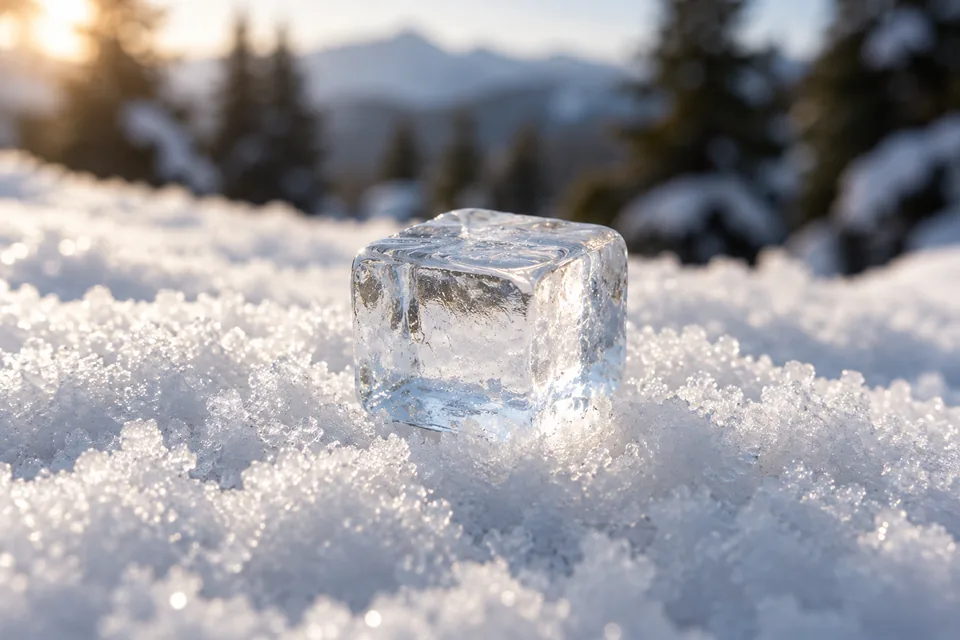
White from clear ice
Snow looks white because its many ice grains scatter visible sunlight in different directions, sending a mixture of colours back to your eyes. A clear piece of ice lets much more light pass through.
Same ingredient, a very different light show. Snow has not been given an extra coat of white paint.
Light takes the scenic route
A snowbank contains countless ice grains with air between them. Light encounters surface after surface rather than travelling neatly through one clear block.
The Swiss snow research institute SLF describes how these encounters change the light’s direction. Together, the colours in the returned light give clean snow its familiar white appearance.
So why can it look blue?
Deep snow can look bluish. As light travels farther through it, more red light is absorbed than blue, leaving a different balance of colours to emerge.
The National Snow and Ice Data Center explains this longer light journey. For another icy surprise, find out why ice floats: frozen water has more than one unusual trick.