
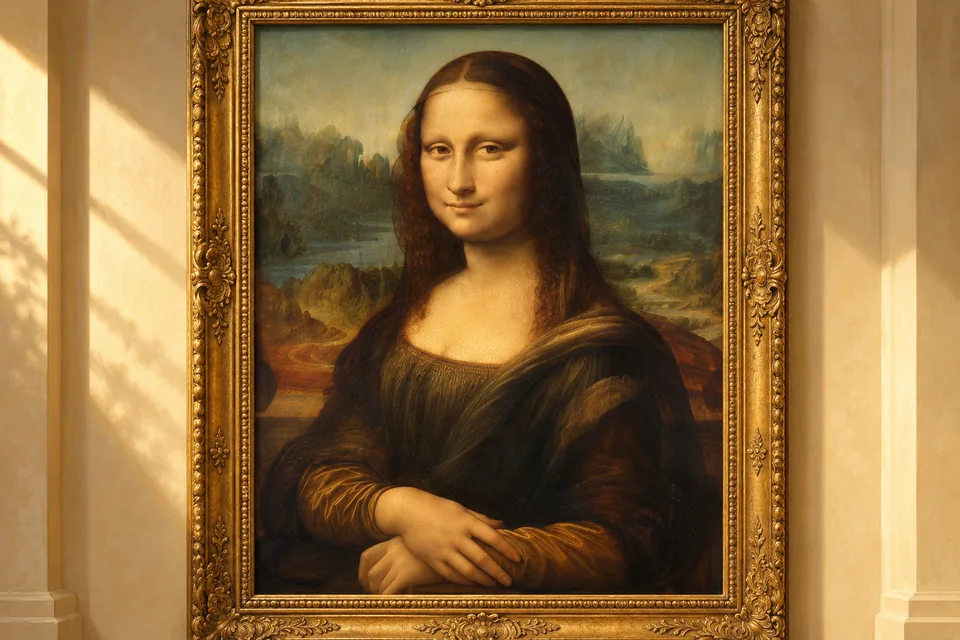
A masterpiece became a celebrity
The Mona Lisa is famous for Leonardo da Vinci’s skill, its intriguing smile and centuries of admiration. Its theft in 1911 then brought a much wider audience.
The Louvre points to both the painting’s artistry and its eventful history. The smile helped; the newspaper headlines certainly did too.
The edges are part of the trick
Look at the face. Instead of a hard outline, Leonardo used delicate changes between light and shadow. Thin layers of paint soften the edges.
This is sfumato, a smoky blending effect. The Louvre’s collection account explains how it helps give the figure and her subtle smile a sense of life.
The day the wall had a gap
On 21 August 1911, the painting disappeared. Vincenzo Peruggia, a glazier who had worked at the Louvre, had stolen it.
The museum describes the uproar and the recovery: Peruggia tried to sell it to an Italian art dealer, who alerted the authorities. It was found in 1913, with its fame greater than before.
She was already somebody
The theft did not turn an unknown painting into a masterpiece. Artists admired it in Leonardo’s lifetime; Giorgio Vasari praised it in his writing in 1550.
Artistic reputation came first. A real-life mystery helped spread that reputation much further.
For another historical surprise, discover why Cleopatra lived closer to the Moon landing than to the building of the Great Pyramid.