
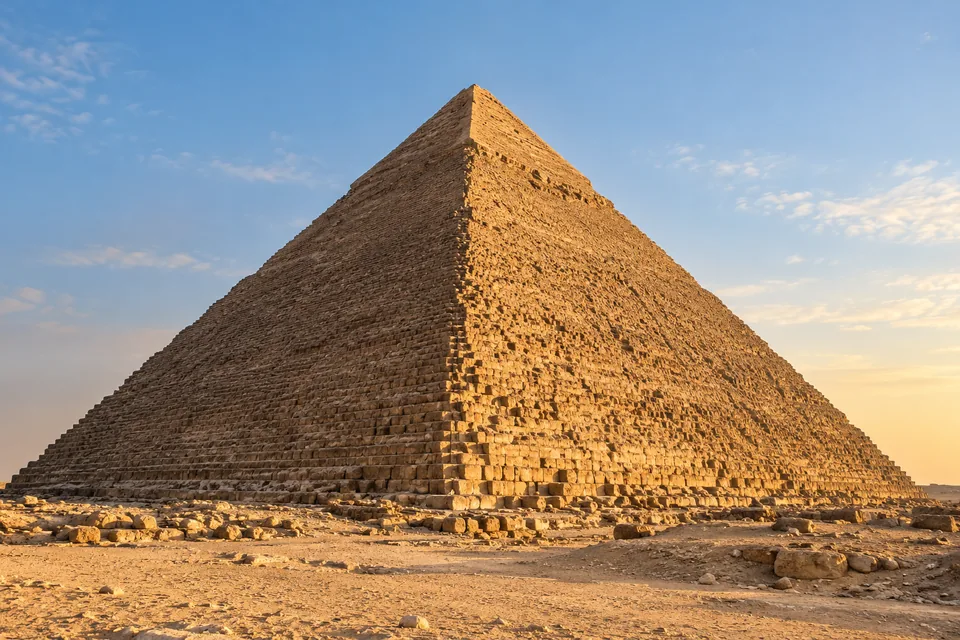
A tomb with a larger purpose
Ancient Egypt’s royal pyramids were built as tombs for kings and as part of religious complexes intended to support them in the afterlife. The huge stone monument marked a burial place, while surrounding buildings served the funeral and continuing ceremonies.
The familiar triangle is therefore only one part of the story. To understand the whole site, picture the buildings beside it too.
What stood beside the pyramid?
Harvard’s Digital Giza describes two main purposes for a royal pyramid complex: preparing and burying the king, then continuing to care for him through offerings and religious ceremonies.
A typical complex included a temple beside the pyramid, a valley temple farther away and a causeway connecting the temples. A causeway is a built pathway. Priests could present offerings and read religious texts in these spaces after the burial.
Not all pyramids looked the same
Egypt’s first pyramid, built for King Djoser at Saqqara, had steps. Later builders developed the smooth-sided form familiar from Giza. The Great Pyramid there belonged to King Khufu.
The Metropolitan Museum of Art explains how pyramid design changed alongside royal religious beliefs. These monuments were built within a changing tradition, rather than from one unchanging plan.
Put the monument in time
Knowing the purpose does not settle every question about how each stone was moved. Those are different historical questions.
For a surprising sense of the timescale, compare Cleopatra, the pyramids and the Moon landing. Then discover how the Rosetta Stone helped unlock Egyptian writing.