
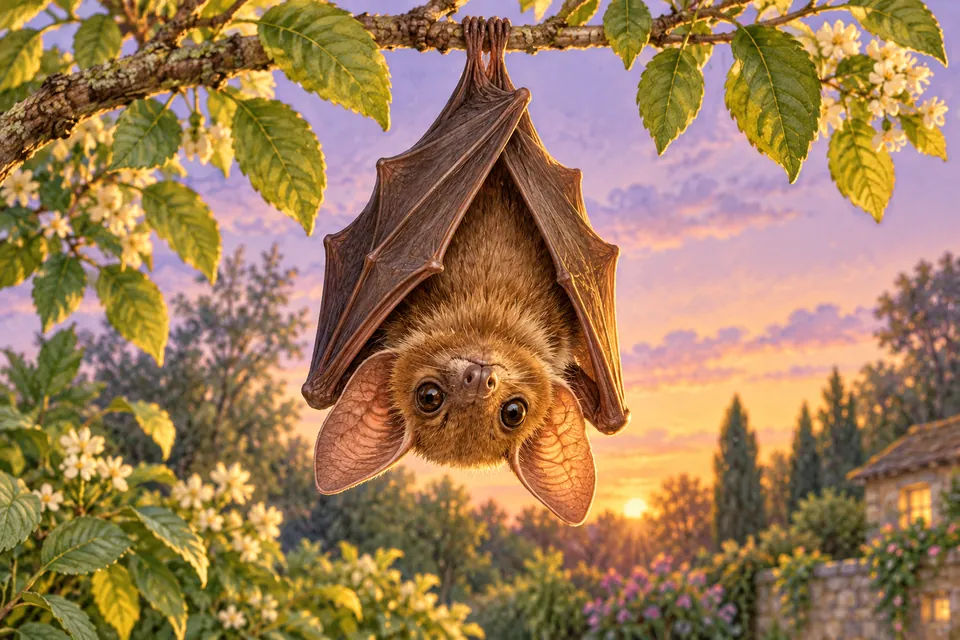
Those little eyes work
No, bats are not blind. They have working eyes, and many species use sight alongside echolocation. “Blind as a bat” is a memorable phrase with a faulty animal fact inside it.
The U.S. Geological Survey explains that bat eyes can be sensitive to low light. Small eyes do not mean useless eyes.
Their ears add another view
Imagine trying to follow a tiny flying insect after sunset. Many bats send out calls and listen to the returning echoes.
The Bat Conservation Trust describes how these echoes reveal information about what is ahead, including an insect’s size, shape and direction. That is echolocation: finding things through reflected sound.
Not every bat sees the same way
According to Bat Conservation International, eyesight varies between species. Some fruit bats rely strongly on vision, while many insect-hunting bats make extensive use of echoes.
So “bats can see” does not mean “all bats see exactly like humans”. Different eyes suit different lives. Sight and sound can provide different clues about the same surroundings.
Keep the bat. Lose the myth.
A bat flying through the evening is not simply blundering around without sight. Its senses are doing work that is easy to miss from the ground.
For another animal surprise, find out why flamingos are pink. Or compare a different sound-and-light puzzle: why thunder arrives after lightning.