
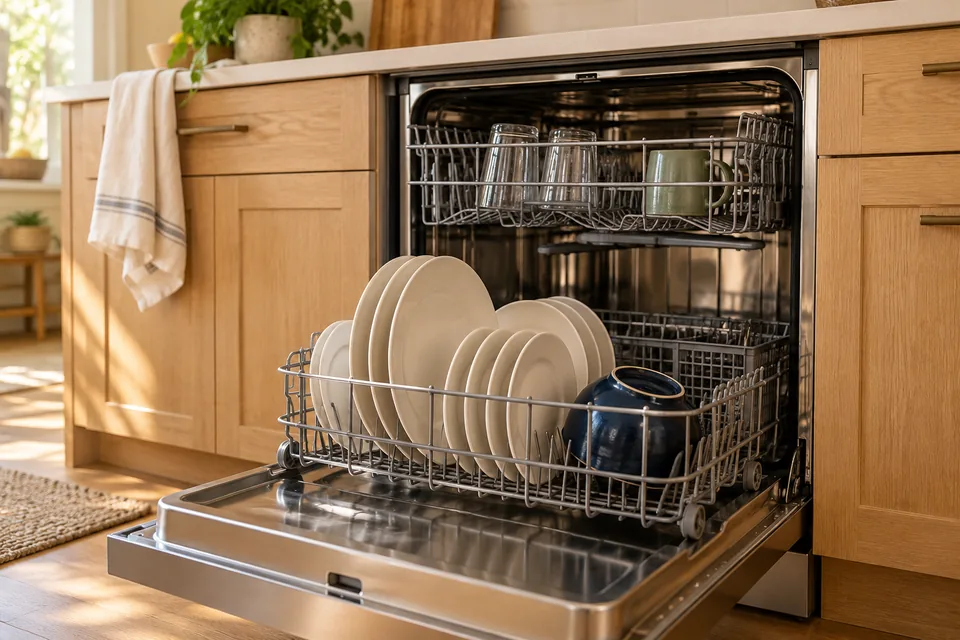
The plates stay put
A dishwasher cleans by pumping hot water and detergent through spray arms, then draining the dirty water and rinsing. The plates stay on their racks while the water does the travelling.
Behind that closed door, the useful picture is a carefully directed shower. Even your breakfast bowl gets its turn under the jets.
It starts with a shallow pool
Whirlpool explains that water collects at the bottom of the tub. A circulation pump sends it into the spray arms, whose jets spread the wash water around the dishes.
Warm water, detergent and those moving jets work together to loosen and carry away food. The cupboard does not fill to the brim.
Wash, drain, rinse
Filters help separate food particles from the water. After washing, dirty water drains away; the rinse sends clean water around the dishes to remove detergent residue.
Washing and rinsing are different jobs. For another look at the cleaning part, discover how soap deals with a greasy plate.
What about the last droplets?
Drying depends on the machine. Some models use heated air; others use condensation.
Bosch describes a condensation system in which water vapour meets cooler stainless-steel walls and turns into droplets that drain away. Cleaning the plates and getting them dry are two parts of the same behind-the-door routine.