
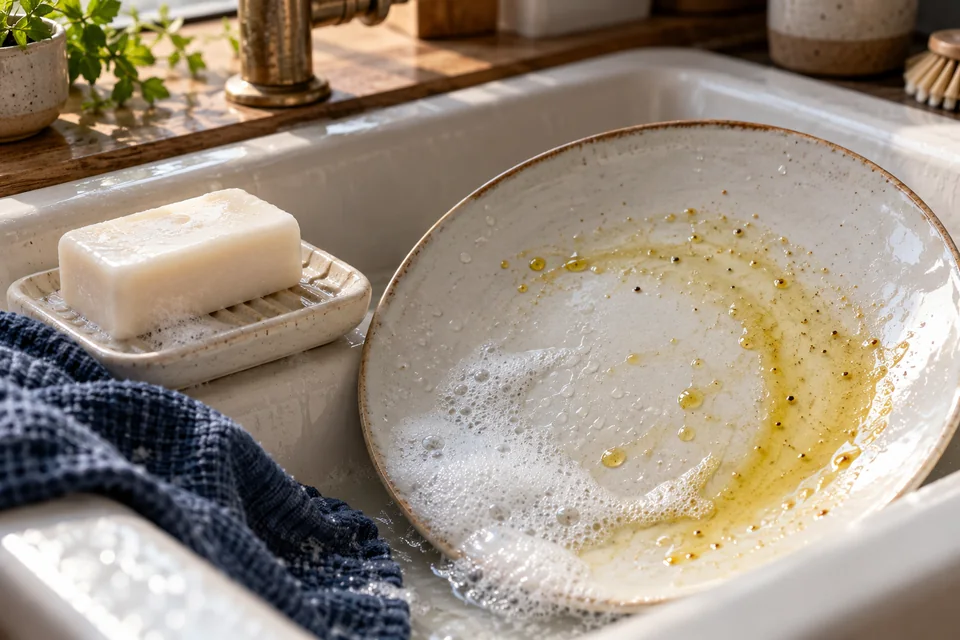
Grease needs a lift
Soap helps remove grease because its molecules have one end attracted to water and another that mixes with oils. That combination helps greasy dirt travel away in the rinse water.
If plain water has ever skated over an oily plate, you have met the problem soap helps solve.
One molecule, two jobs
The American Chemical Society describes soap’s water-attracted head and oil-compatible tail. The usual names are hydrophilic and hydrophobic: water-loving and water-avoiding.
Rather than making oil magically vanish, soap helps water carry it. Think of the two ends as a connection between things that otherwise mix poorly.
Tiny grease taxis
In water, soap molecules can gather into clusters called micelles. Their tails face inwards, away from the water; their heads face outwards. Greasy material can sit inside.
Bellevue College’s chemistry guide explains how these clusters carry oily dirt in water, so rinsing can take it away. Our “taxi” is a comparison, not something you could spot driving across the plate.
Is washing-up liquid actually soap?
Often it uses synthetic detergents rather than traditional soap. These are different substances, but their molecules also combine water-friendly and oil-friendly parts.
And those big bubbles? They are a different sight from the tiny clusters. Discover why soap bubbles are round, or explore more small surprises hidden in everyday objects. Even the washing-up has a story.