
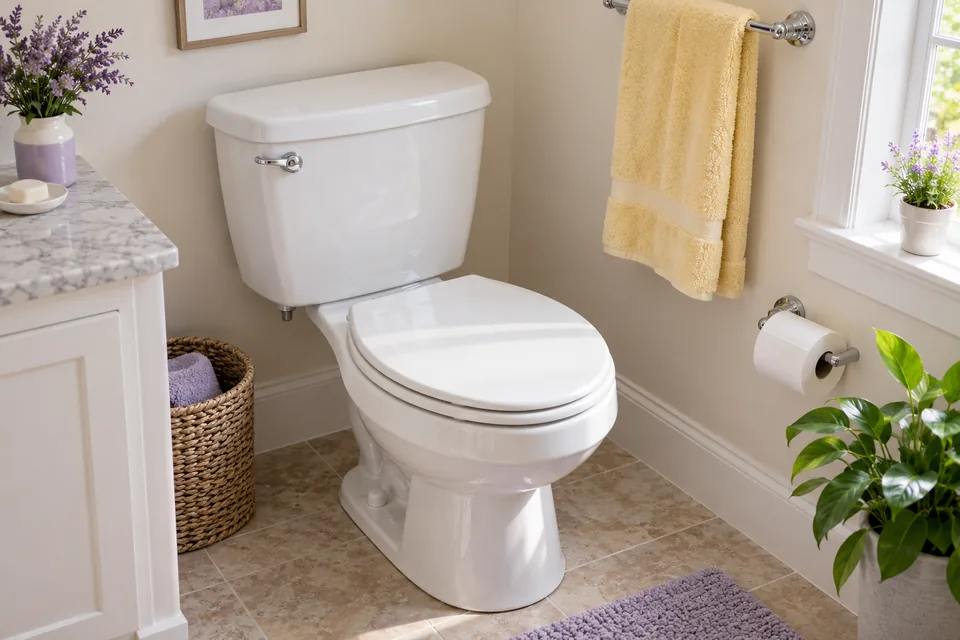
The water is already waiting
A gravity-flush toilet uses water stored above the bowl. Open a valve, and gravity sends that water down in a rush. The flush itself needs no electric motor.
You tap a lever, hear a swoosh, and the bowl empties. The quiet hero is the cistern: the tank behind the seat. It holds water until you ask for it.
The US Environmental Protection Agency describes gravity flushing as the work of stored water and its weight. Think of tipping a jug: raising the water first gives it somewhere to fall.
A little float gets it ready again
The falling water level lowers a float inside the cistern. This floating part controls the fill valve, which lets fresh water in.
As the tank fills, the float rises. At the set level, it shuts the valve. The bowl also gets fresh water. These simple movements prepare the next flush without a timer or a computer.
Does every toilet work this way?
This is one common design. EPA distinguishes gravity flushing from pressure-assisted flushing, which uses water held under pressure. Some toilets use electric pumps, so the answer depends on the model.
Even a gravity toilet needs its water supply to refill. A motor-free flush is only one part of the whole plumbing system.
Good design can also use less water: EPA explains how efficient toilets are tested for both flushing performance and water use. The clever bit is making a carefully timed rush do a useful job.