
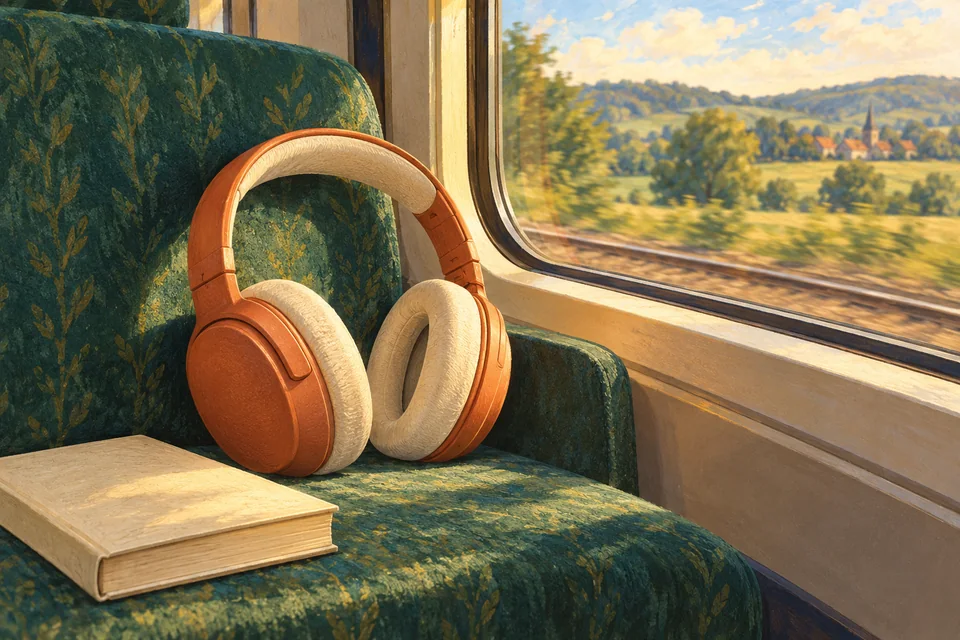
A quieter journey, made with more sound
Active noise cancellation uses microphones and electronics to produce opposing sound waves, reducing some background noise at your ears.
It sounds backwards: adding sound can make things quieter. The trick is to make the added wave counteract the unwanted one, rather than simply playing louder music.
The headphones have two jobs
First, ear cushions and a good seal physically block some outside sound. That is passive isolation.
Then the powered system listens through microphones, processes the incoming noise and generates an opposing signal. Bose explains how the physical barrier and active cancellation work together. The padding and the electronics are doing different jobs.
Why the engine fades but a voice gets through
A steady engine drone is easier to counteract than speech that keeps changing. Sony’s explanation describes why cancellation is especially effective with constant, lower-pitched noise, and why other sounds remain audible.
Picture a train’s background rumble alongside someone asking which stop comes next. Reducing the first does not guarantee erasing the second. Noise cancelling is not a force field of silence.
Does it work without music?
Yes, active cancellation can work without music playing. The electronics still need power. Bose describes this separate job: your playlist can pause while the cancellation keeps working.
Of course, headphones cannot switch off a tune playing in your memory. That is a different mystery: why a song gets stuck in your head.