
Try it yourself
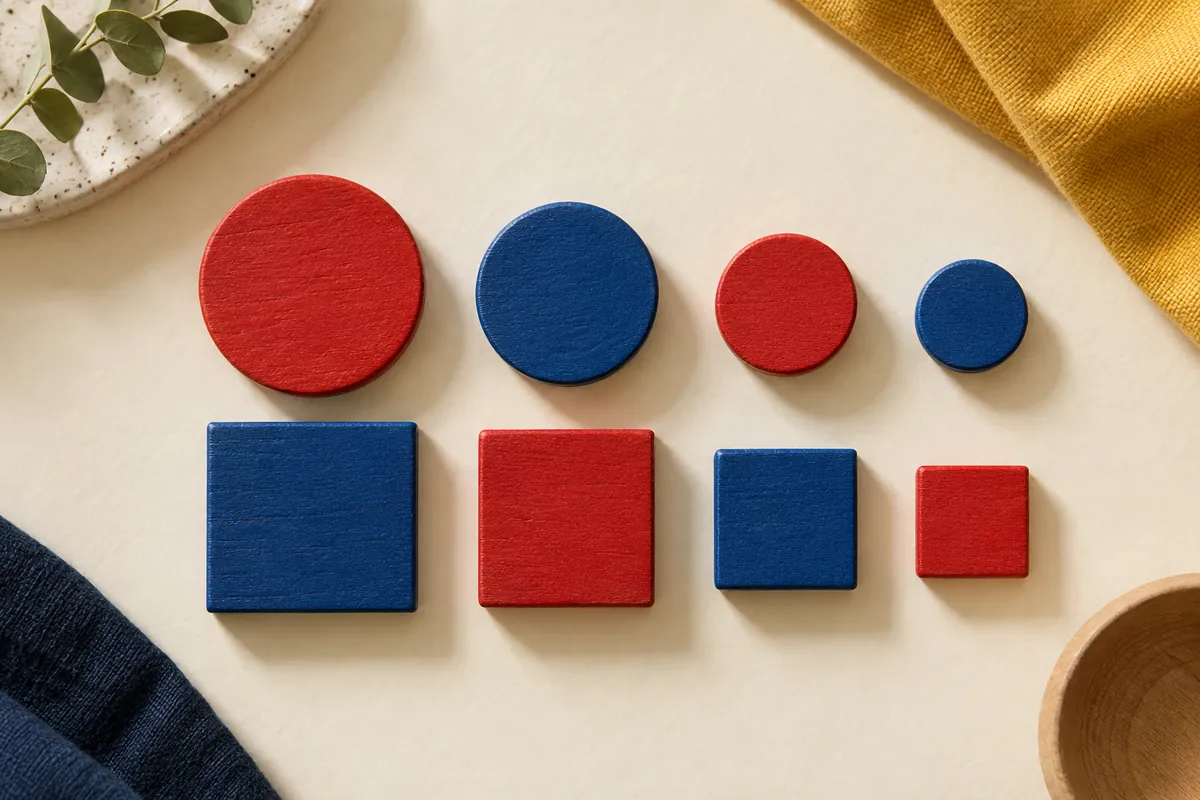
Draw a red circle, a red square and a blue circle. Now try two instructions:
- Choose red AND round. Only the red circle fits. It must be both things at once.
- Choose red OR round. All three fit. The red square is red, the blue circle is round, and the red circle is both.
Here, “or” allows either rule or both. This is called inclusive or: it includes the objects that fit both rules.
A word can change the answer
A red square fits “red or round” because it is red. It does not fit “red and round” because it is not round. Read the connecting word before counting.
In everyday speech, “or” can sometimes mean one choice but not both. A puzzle should say if it wants you to choose one but not both. Check the wording before you answer.
Keep the rule separate from the examples
Seeing two red round objects does not prove that every red object is round. The red square is a counterexample: one object that breaks that claim.
Draw one object for each group: red only, round only, both, and neither. This helps you check what the rule allows.