
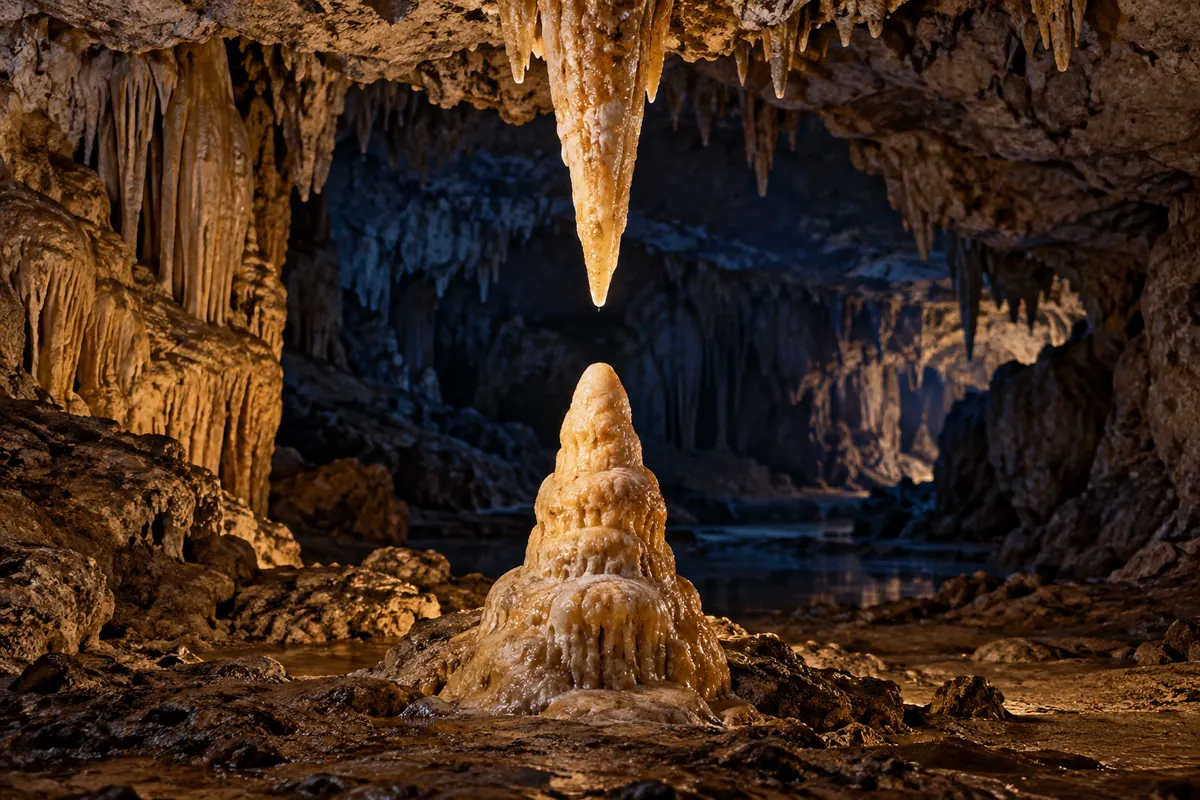
Ceiling or floor?
Stalactites hang from a cave ceiling. Stalagmites grow up from the floor. If the two meet, they form a column.
The names are easy to confuse, so start by looking at where the formation is attached. That is a better guide than whether it looks long, round or pointed.
A way to remember the names
Think of the c in stalactite for ceiling and the g in stalagmite for ground. It is a spelling aid rather than the origin of the words, but it can help when you need to recall them quickly.
Try sketching a cave with one formation hanging down and another growing up. Label the ceiling and ground, then add the two names.
How dripping water builds rock
In many limestone caves, water carries a dissolved mineral called calcium carbonate. Dissolved means it is mixed into the water, so you cannot see separate grains.
When the water reaches the cave, it can lose some carbon dioxide gas. Some of the mineral can then come out of the water as solid calcite. A tiny bit is left behind.
As more water arrives, those tiny amounts can build up on the ceiling or beneath the drips on the floor. That is how dripping water can slowly build rock.
A thin, hollow stalactite is called a soda straw. Caves have other shapes too, so not every formation is a stalactite or stalagmite.
Why size does not tell you the age
Growth depends on water supply, chemistry and other conditions. A formation’s length alone cannot give you a reliable age.
On a cave visit, stay on the permitted route and avoid touching formations. They can be fragile, and oils from hands can affect further mineral deposits.
Name the three formations
Picture a point hanging from the roof, a mound rising from the floor and a pillar joining the two.
Show the names
- Hanging from the roof: stalactite.
- Rising from the floor: stalagmite.
- Joining floor and ceiling: column.