
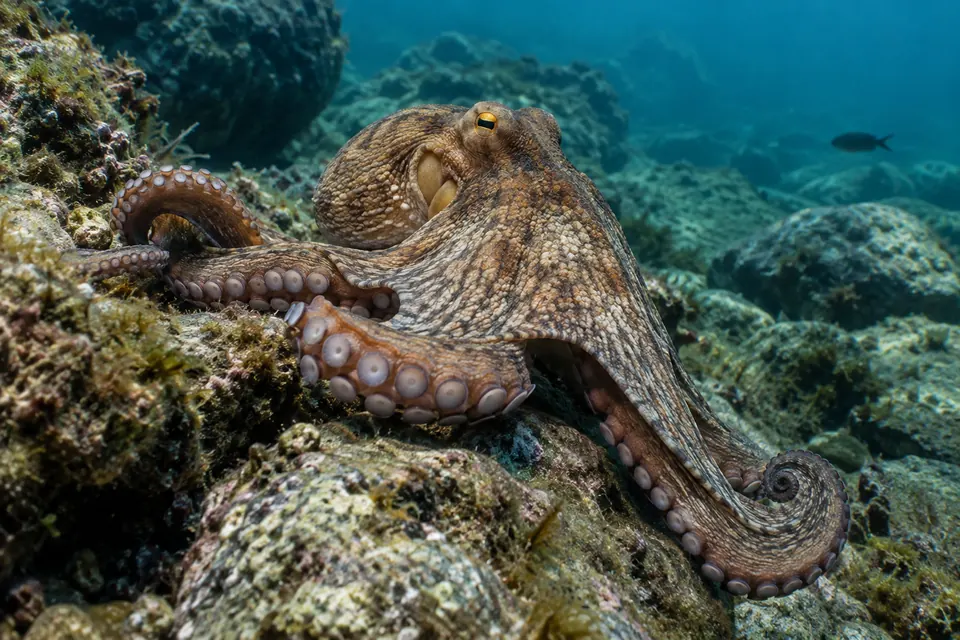
Two for the gills, one for the body
An octopus has three hearts, each with a part to play in moving blood around its body.
An octopus takes oxygen from the water through body parts called gills. Two hearts pump blood through those gills, where the blood picks up oxygen. The third heart sends that oxygen-carrying blood around the rest of the body. Remembering those jobs makes the number easier to recall: two for the gills, plus one for the body.
Why is the blood blue?
Octopus blood carries oxygen using a protein called haemocyanin, which contains copper. The blood appears blue when that protein is carrying oxygen.
Humans use haemoglobin, an iron-containing protein, to carry oxygen. Both proteins do a similar job, but their different chemistry gives blood its different colours.
Can you remember the arrangement?
Picture three hearts and label two “gills” and one “body”.
Do all three hearts do the same job?
No. Two send blood through the gills; the third supplies the rest of the body.
For another colour surprise, a flamingo’s pink feathers start with its food.