
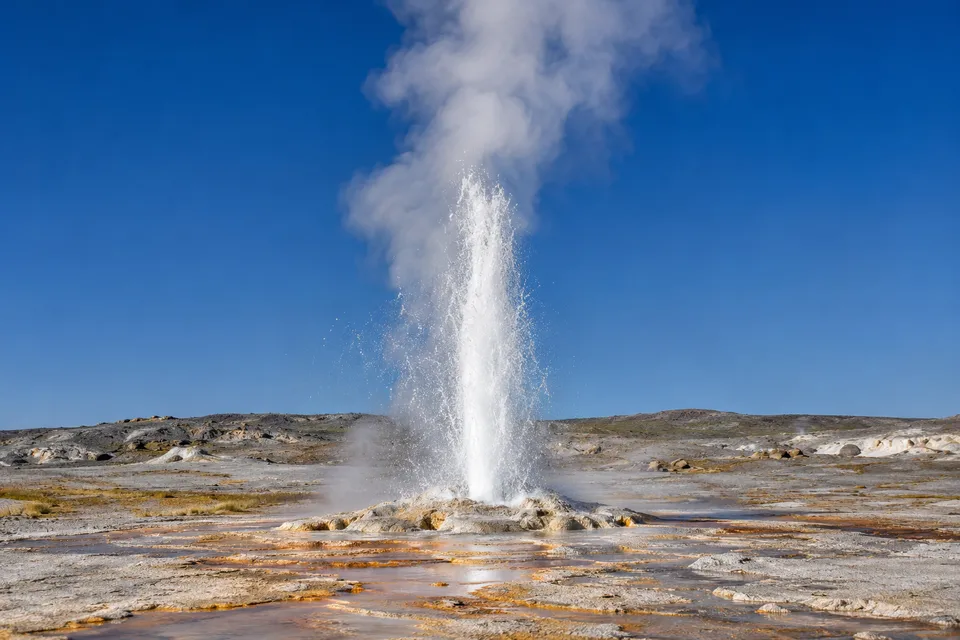
Why does a geyser erupt?
A geyser is a hot spring that erupts from time to time, shooting hot water and steam into the air. Its shape underground matters. The National Park Service describes narrow passages in geysers that keep hot water from circulating freely to the surface.
Hot rock warms the water from below. The pressure from the water above helps keep the deeper water liquid even when it is hotter than the boiling point at the surface.
How does a splash become an eruption?
Imagine a chamber full of hot water with a narrow passage leading up to a vent. As steam bubbles grow, they can push a little water out of the vent. With less water pressing down, the pressure below falls. Some of the deeper water boils rapidly, and the expanding steam drives more water up the passage.
Yellowstone’s eruption guide explains that pressure drop. The same link between pressure and boiling is why water can get hotter inside a pressure cooker than in an open pan.
Why does the geyser stop?
Water can leave faster than it flows back in. The eruption dies down as the underground supply runs low or the system cools. Water can then collect and heat up again.
Old Faithful erupts relatively regularly. At Steamboat Geyser, gaps between major eruptions can be much longer and vary widely.