
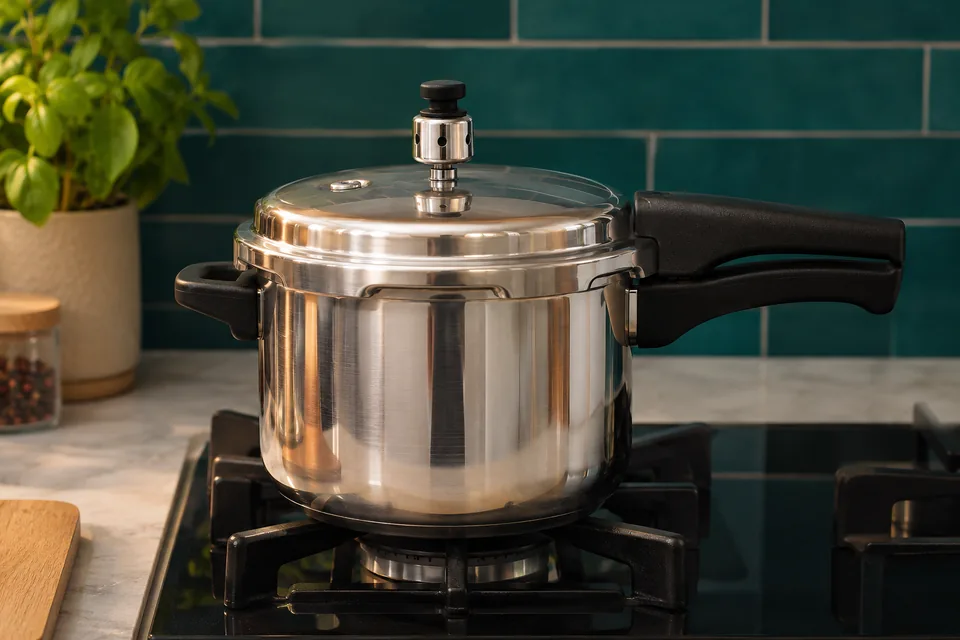
Change the conditions inside
A pressure cooker raises the pressure inside its pot, allowing water to boil at a higher temperature. The hotter water and steam can speed up the processes involved in cooking.
NC State University explains the role of the trapped moisture. The important change is the temperature that the moist surroundings can reach, rather than pressure simply squeezing food until it is cooked.
100°C depends on the pressure
Pure water boils at about 100°C at standard atmospheric pressure. HyperPhysics explains that a higher surrounding pressure raises that boiling point; a lower pressure reduces it.
Picture two ordinary open pans at the same atmospheric pressure, with water already boiling. One bubbles gently and one vigorously. The faster bubbling does not by itself show a higher boiling temperature. Extra heating can turn liquid water into steam faster while the boiling liquid stays near the same temperature.
That link between pressure and boiling also explains how a geyser erupts. A sudden drop in pressure lets some of the underground water boil rapidly.
A controlled pressure
In a pressure cooker, the conditions above the liquid change. Water can reach a higher boiling temperature than it would in an open pan at the same location.
HyperPhysics describes a controlled vent that limits the pressure at which the cooker operates. A pressure cooker is not meant to keep every bit of steam trapped while pressure rises without control.
The exact temperature depends on the cooker and its operating conditions. This is an explanation of the mechanism; follow the manufacturer’s instructions for using an appliance.
Follow the heat further
How heat gets into a pan is another part of the story. Compare the mechanism of an induction hob with the pressure conditions inside this pot.
Then follow energy in a different direction with how a fridge moves heat out. Connect both ideas in Follow the heat around a kitchen, from cooling a drink to changing the boiling point of water.