
You already know the floor plan
A memory palace is a familiar place you imagine walking through, with things you want to remember linked to particular stops. It is also called the method of loci.
No chandeliers required. Your flat, a familiar classroom or the route to the kitchen can provide the setting.
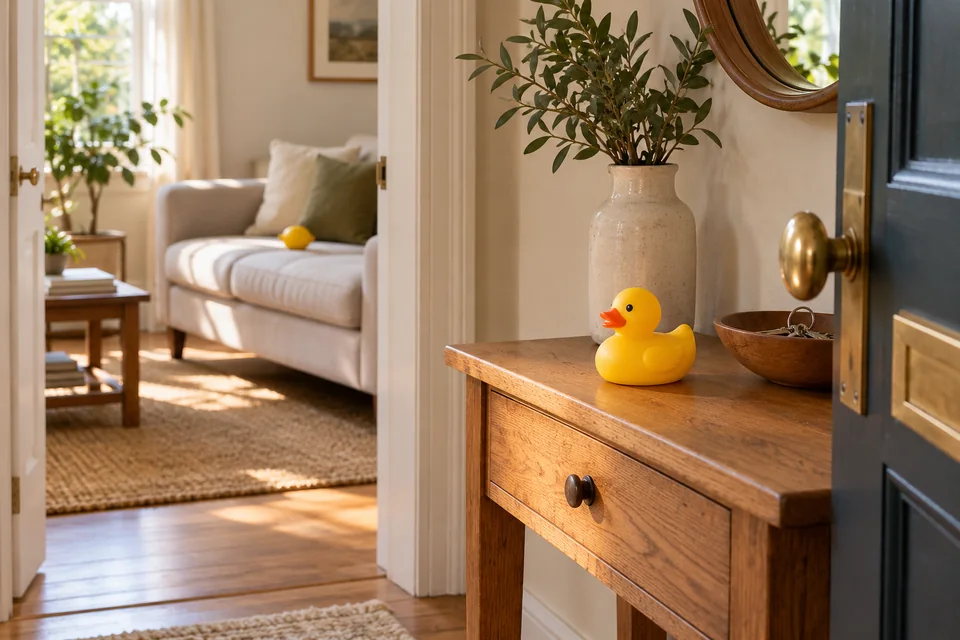
Why is there a duck at the door?
Suppose your list is duck, lemon, umbrella. Picture a rubber duck blocking your front door, a lemon occupying the sofa and an umbrella sitting in the kitchen sink.
Now mentally follow that route in the same order. Each location gives you a cue for the next item. The scene is imaginary; you can leave the actual sofa alone.
Give each stop a job
Stanford’s learning guide recommends a known location, a planned route and memorable images. Choose distinct stops rather than cramming everything beside the door.
This is one kind of mnemonic: a cue that helps you remember. If a long list feels unwieldy, chunking takes a different approach by grouping information.
A useful trick, not perfect recall
A 2025 review of adult studies found benefits for recalling items in order, but rated the evidence low to very low in quality.
Treat it as a technique to practise, not a promise of flawless memory. For now, can you retrace your three stops? The umbrella should still be causing trouble in the sink.