
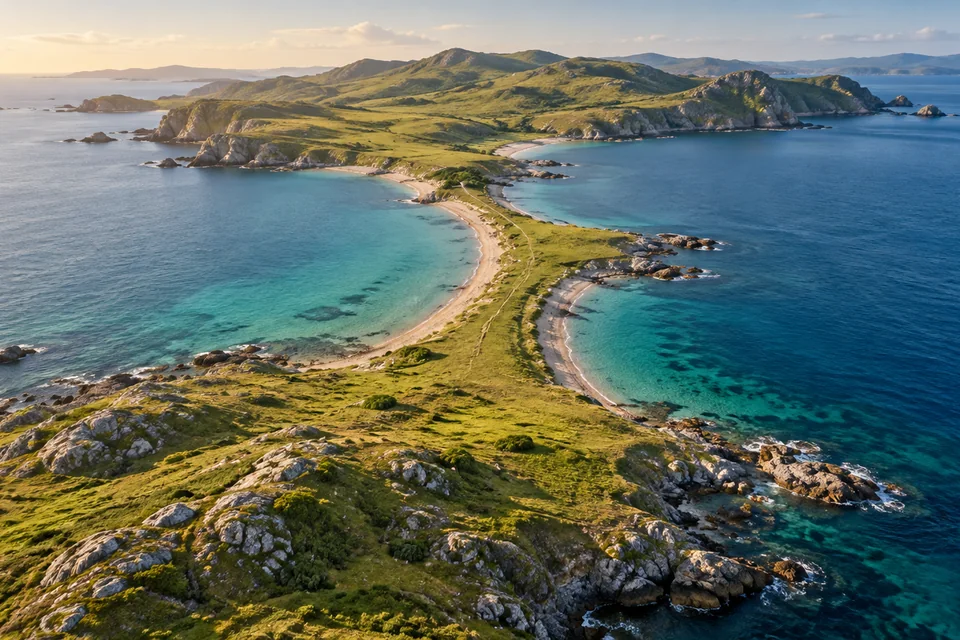
A neck of land
An isthmus is a narrow strip of land that joins two larger areas of land, with water on both sides. Think of a natural land bridge, rather than a bridge built by people.
It may look like a tiny detail on a map. For an animal trying to reach the other side, it can be the entire travel plan.
Panama’s natural bridge
The Isthmus of Panama connects North and South America. NASA describes how this land bridge allowed animals to move between the continents.
Ancestors of armadillos travelled north; ancestors of horses travelled south. Long before anyone booked a flight, this strip of land was changing who could go where.
The land is not the canal
The isthmus is the land connection. The Panama Canal is a waterway built across it, allowing ships to travel between the Atlantic and Pacific.
The Panama Canal Authority explains how its locks work: they raise and lower ships between the oceans and Gatún Lake. Land gives walkers a route; engineering gives ships one too.
Three clues for your next map
An isthmus connects land areas. A strait is a narrow passage of water connecting larger bodies of water.
A peninsula reaches out into the water while staying attached to land. Its narrow connection can be an isthmus. To finish the island vocabulary, meet an archipelago: islands with company.