
Same sunlight, longer journey
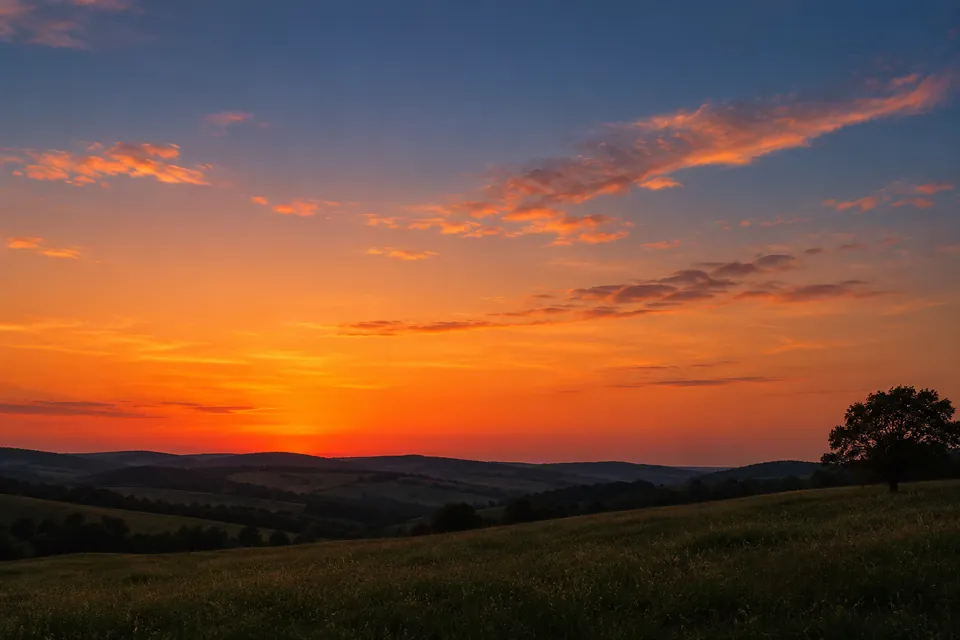
Sunsets can look red or orange because sunlight passes through more air when the Sun is low. More blue light is scattered out of that direct path, leaving a warmer mixture to reach us.
The Sun has not become a red lamp. NASA explains how its low position changes the route through the atmosphere. The colours were already in the sunlight.
The slanting route matters
Imagine the atmosphere as a layer wrapped around Earth. When the Sun is high, its light takes a relatively short route through that layer. Near the horizon, it comes in at a shallow angle and travels through more air.
The Met Office describes this longer path at sunrise and sunset. More air gives the light more chances to be scattered before it reaches you.
Where did the blue go?
In the blue-sky lesson, we saw that air molecules scatter short blue wavelengths more strongly than longer red ones. Along the evening route, much of that blue light is redirected away from the direct beam.
The remaining mixture is richer in longer wavelengths, so it can look orange or red. NOAA explains the difference between this arriving sunlight and the scattered blue light. Blue light does not turn into red light.
Two colours, one idea
At noon, scattered blue light makes the sky familiar. Near sunset, the longer route changes the mixture arriving from the Sun’s direction. Sunrise can produce warm colours for the same reason.
A bright blue afternoon and an orange evening are two views of the same process. The next time the sky changes colour, the useful question is not “Has the Sun changed?” but “How far has this light travelled through the air?”