
The custom came before the car
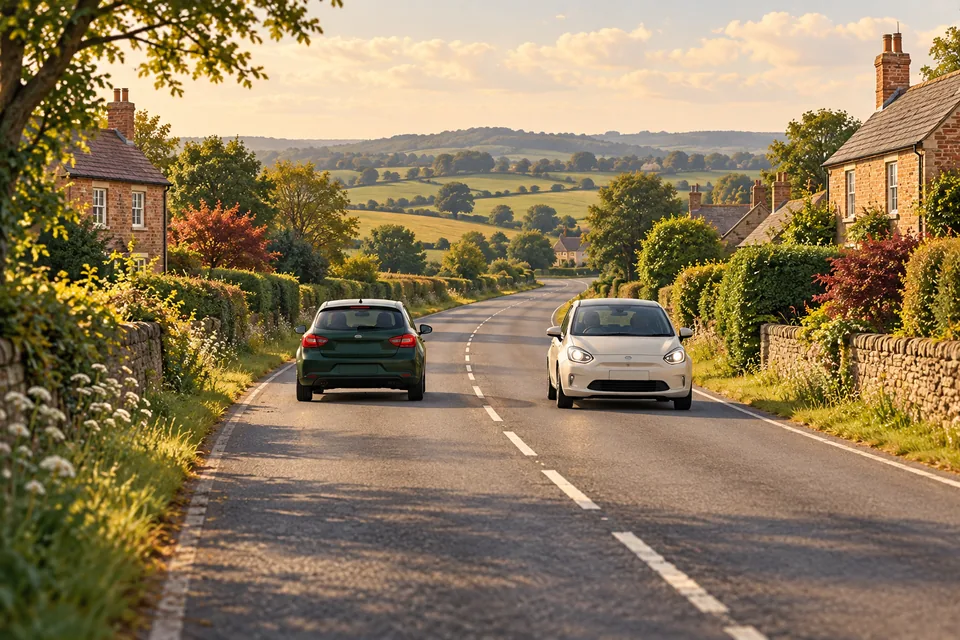
Britain drives on the left because an older road custom became an established rule. Its earliest origins are less certain than the modern habit might suggest.
Parliament's history explains that an 1835 Act formalised the practice. Motorists inherited a convention already familiar to people travelling with horses and carts.
The law talks about waggons and mules
Section 78 of the original Highway Act 1835 required drivers meeting other traffic to keep their waggons, carts, carriages or animals on the left or near side.
This Act concerned highways in England. Its list of horses, mules and other working animals is a lovely reminder of the traffic the lawmakers had in mind.
What about travellers with swords?
A familiar explanation pictures travellers passing with their sword arm towards an approaching stranger. The National Motor Museum presents the early origins as possible, rather than a firmly established starting point.
It also describes coach drivers choosing the firmest part of a road before enforcement. The past was messier than a neat pair of painted lanes.
An old convention in today's code
Keeping left remains the general instruction in rule 160 of the Highway Code, which also sets out exceptions.
The clearest part of the story is the continuity from an older custom into written rules. For another everyday convention with a surprising British history, discover why eleven calendar dates disappeared in 1752.