
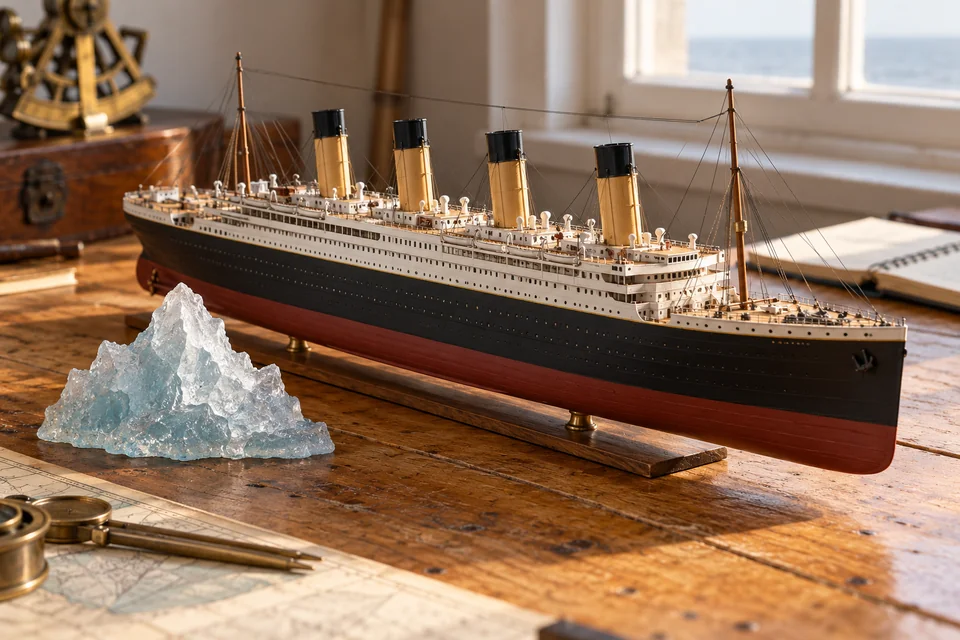
The iceberg began a chain of flooding
Titanic sank because an iceberg collision let seawater flood more compartments than the ship could survive. The damage was below the waterline, where the hull—the ship’s outer body—needed to keep water out.
She struck the iceberg late on 14 April 1912 and sank early on 15 April in the North Atlantic.
Watertight had its limits
The ship’s interior was divided by bulkheads: upright walls separating compartments. This arrangement could keep her afloat with certain spaces flooded, but not with unlimited damage.
The 1912 inquiry explained the crucial limit: flooding in the forward compartments and front boiler room pulled the ship too low to remain afloat.
Water could pass over the walls
As the bow sank deeper, water rose above the top of a bulkhead and flowed into the next boiler room. That room filled, allowing the process to continue farther back.
The compartments were not individually sealed boxes all the way up. Closing their doors could not stop water passing over the tops as the ship settled.
The inquiry and the wreck tell different parts
The British inquiry attributed the iceberg collision to excessive speed. That was its finding about navigation; the progressive flooding explains how the damage became fatal to the ship.
Later wreck mapping, described by NOAA, documented separate bow and stern sections. The broken wreck adds physical evidence to the written record: the ship came apart as she sank.